Document Automation Software for UAE Companies: What to Buy Before AI
A UAE operator's buying rule for document automation software, with pricing, approvals, audit logs, and AI-readiness controls before rollout.

Buy document automation software only after you know which documents need deterministic templates, which documents need human approval, and which documents should not touch AI yet. For most UAE companies, Docupilot wins for lightweight generation, PandaDoc wins for sales agreements, Formstack wins when forms drive the process, airSlate altaFlow wins for governed workflow automation, and Conga wins when Salesforce-scale complexity justifies enterprise pricing.
The Verdict: Buy The Workflow Spine Before The AI Layer
The best document automation software is the one that matches the document's source data, approval risk, and evidence trail. A UAE operator should not start by asking which tool has the best AI writer. Start by asking which document family is costing time today, who is allowed to approve it, where the final record must live, and whether a reviewer can reconstruct what happened six months later.
If the job is simple generation from clean data, use Docupilot. It is priced from $29/month for 100 delivered documents and includes unlimited templates, testing, Zapier, Make, Airtable, PDF, Word, PowerPoint, Excel, API access, and third-party integrations on all plans.
If the job is sales proposals, agreements, and signature flow, use PandaDoc. Its Business plan is $49 per seat per month billed annually and includes unlimited documents, CRM integrations, deal rooms, and approval workflows.
If the job starts with form intake and ends with a signed or stored document, use Formstack. Its Suite starts at $250/month paid annually and includes Forms, Documents, and Sign, with 3 builder users, 100 forms, 5,000 submissions per form, 10GB storage, unlimited document senders, and unlimited eSignatures.
If the job is a cross-system approval workflow, use airSlate altaFlow. Its Growth plan is $399/month billed annually with 10,000 credits per year, and the platform prices around automation credits rather than headcount.
If the job is enterprise document generation inside CRM, ERP, CPQ, or custom portals, use Conga. Conga is quote-based, but it handles multi-source data, complex formats, conditional sections, formulas, batch generation, and high-volume document processes.
For a UAE company preparing to add AI, this order matters. AI can draft, classify, extract, or suggest. It should not silently approve a contract clause, send a finance document, expose personal data, or overwrite a source record without a logged human checkpoint.
The Comparison Table For A UAE Operator
The right tool choice changes when the same document has a different risk profile. A sales proposal, clinic intake form, supplier onboarding pack, facility maintenance report, and DIFC fund memo may all be "documents," but they do not need the same software.


The mistake is buying the heaviest platform because the board said "AI documents." If a Dubai real estate brokerage only needs to generate an agency agreement from approved CRM fields, Docupilot plus a controlled approval step may be enough. If the same brokerage needs proposal tracking, client comments, signature status, and deal rooms, PandaDoc is a closer fit. If intake data comes from forms, Formstack becomes more natural. If documents must move between Salesforce, NetSuite, Dynamics, email, and storage with permission controls, altaFlow or Conga becomes more defensible.
The Governance Layer: What Must Be Logged Before AI Touches Documents
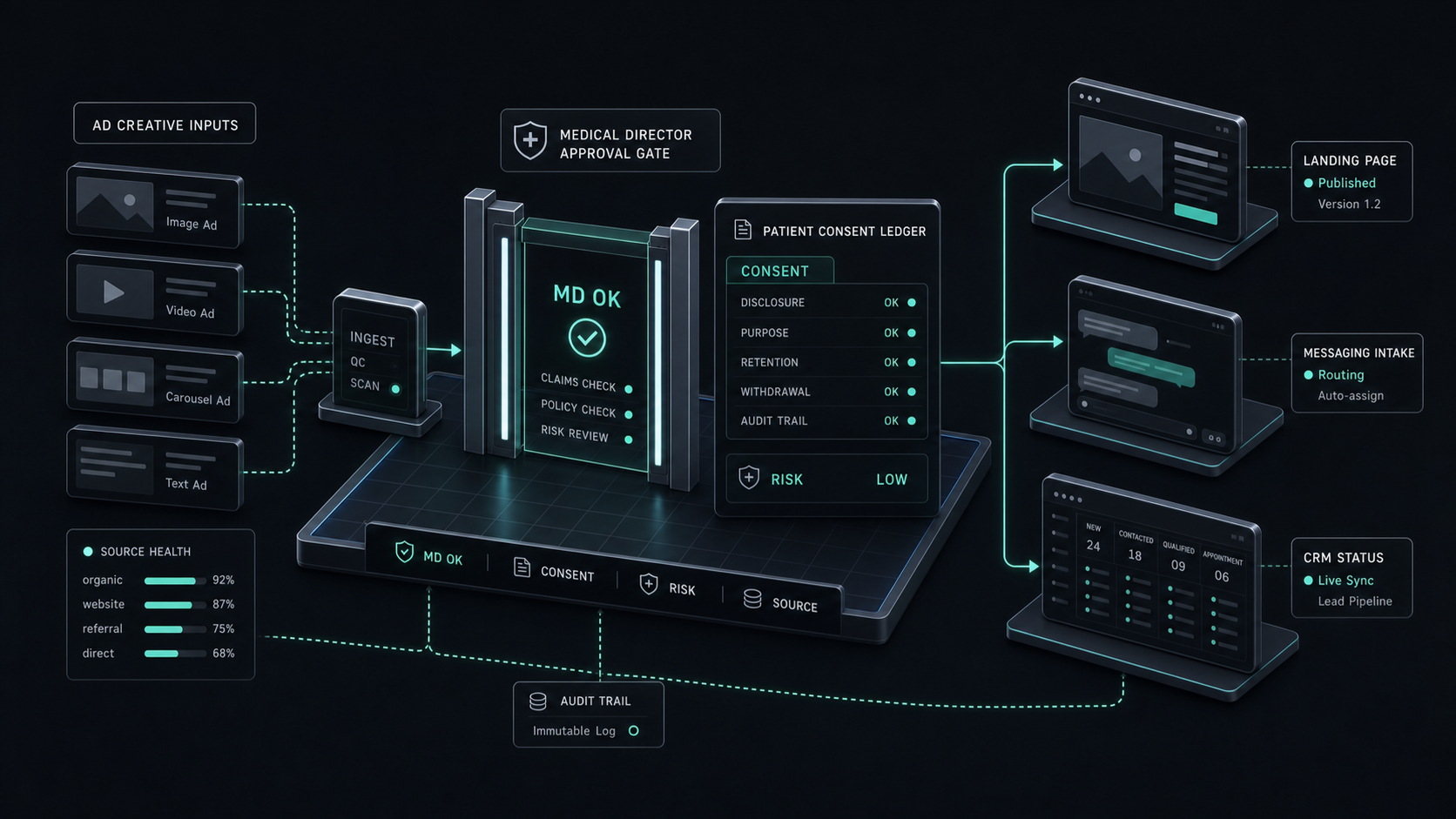
The minimum governance layer is a record of the input, template, approver, output, delivery, and final storage location. That is true even before AI enters the workflow. Once AI is added, the log also needs to show what the AI saw, what it suggested, what a human accepted or rejected, and which final document left the system.
DIFC's updated Data Protection Regulations enacted on September 1, 2023 include Regulation 10 on processing personal data through autonomous and semi-autonomous systems, including AI. DIFC says Regulation 10 addresses privacy and security issues around AI and advanced IT while providing a platform around principles, ethics, and governance. That does not mean every UAE company has the same DIFC obligation. It does mean DIFC and regulated teams should treat AI-assisted document workflows as evidence systems, not just productivity tools.
Dubai also has a supplier-verification signal for AI providers. The Dubai AI Seal is a verification system developed by the Dubai Centre for Artificial Intelligence to help businesses and government entities verify AI service providers. It has 6 main tiers, E, D, C, B, A, and S, and each Seal includes a unique serial number that organisations can check on the Dubai AI Seal website. The service is free of charge.
For a document automation purchase, those facts translate into a practical checklist:
- Input log: which system supplied the data, such as CRM, HRIS, finance system, SharePoint, form, or spreadsheet.
- Template log: which template version generated the document.
- Approval log: who approved the template, who approved the output, and what threshold required approval.
- AI log: what AI was allowed to do, such as classify, extract, draft, summarize, or flag exceptions.
- Delivery log: who received the document, through which channel, and when.
- Storage log: where the final signed or approved record lives, and who can access it.
- Exception log: what failed, what changed manually, and who cleared the exception.
The safest pattern is deterministic generation first and AI assistance second. Generate the document from approved fields. Route exceptions to a human. Use AI for classification, extraction, summary, or drafting where a reviewer can see the source and approve the output.
Tool-By-Tool Buying Rules
Docupilot is the first tool to test when you have clean data and repeatable templates. It can map CRM, HR, forms, databases, and other data sources into placeholders, use conditional logic, export PDF, DOCX, or HTML, and connect through REST API and webhooks. The pricing model is easy to scope because it is based on delivered documents.
For example, a UAE HR team issuing 80 standard offer letters, salary certificates, or policy acknowledgements per month can start with the $29/month Starter plan. A brokerage generating 400 agency agreements and viewing-confirmation documents per month would look at the $99/month Plus plan for 500 delivered documents. If eSignature is needed, Docupilot prices the add-on from $1.50 per envelope, with volume discounts as low as $0.75 per envelope.
Use Docupilot when the key risk is bad copy-paste work. Do not use it as the whole governance layer if the workflow also needs complex multi-step approvals, case management, or enterprise permissioning.

PandaDoc is the better fit when the document is part of a sales process. Its Free plan includes 60 documents per year and unlimited seats. Starter is $19/month billed annually with 110 documents per year. Business is $49 per seat per month billed annually and includes unlimited documents, CRM integrations, custom branding, content library, deal rooms, and approval workflows. Enterprise is quote-based and adds CPQ, workflow automation, smart content, SSO, team workspaces, notary, and API features.
A UAE B2B services firm selling retainers can use PandaDoc to standardize proposals, collect comments, route approval, and keep a clean agreement trail. The governance question is not whether the proposal looks good. The question is whether discounting, payment terms, non-standard clauses, and customer data are approved before the agreement goes out.
Use PandaDoc when sales document control matters. Do not use it as the core platform for back-office document routing if the process starts from operational forms or ERP events rather than a sales motion.
Formstack is the practical choice when forms drive the workflow. Its Suite starts at $250/month paid annually and includes Forms, Documents, and Sign. The Suite plan includes 3 builder users, 100 forms, 5,000 submissions per form, 10GB storage, unlimited document senders, and unlimited eSignatures. Formstack Documents can upload existing templates, create new templates, populate documents from Salesforce, HubSpot, SharePoint and other systems, and deliver through Formstack Sign, CRM, or document repositories.
A UAE clinic can use this pattern for admin documents without touching diagnosis. A patient submits an intake form, the system generates an internal admin summary, the front desk reviews missing fields, the clinic routes insurance paperwork, and the final approved document is stored in the right folder. AI can help classify missing information later, but the first win is controlled intake-to-document flow.
Use Formstack when the document starts with a structured form. Do not buy it only for proposal generation if your main motion is sales agreements and CRM quote approvals.
airSlate altaFlow is stronger when the document is only one part of a wider workflow. Growth is $399/month billed annually for 10,000 credits per year. Automate is $799/month billed annually for 20,000 credits per year, with one premium integration, API access, priority Zoom support, and premium SLA. Enterprise is custom and adds custom integrations, deployment assistance, SSO, granular access control and group management, plus enterprise reporting and monitoring.
airSlate says altaFlow pricing scales by automation credits rather than headcount, all plans include unlimited users, and most workflows average 3 credits per document package. That matters for UAE operations teams where the document touches many people but the automation volume is predictable. It can connect to CRMs, ERPs, cloud apps, email services, SQL databases and more through bots, and it offers REST APIs for application, cloud storage, website, and CRM integrations.
Use altaFlow when approvals, integrations, roles, and auditability matter more than document design. Do not buy it for a tiny single-template use case unless you expect the workflow to expand.

Conga is the enterprise choice when documents depend on CRM, ERP, CPQ, or portal data at scale. It combines Conga Composer and Conga Sign for document generation and agreement execution. Conga can merge data from CRM, ERP, or cloud systems, generate Word, PDF, PowerPoint, Excel, and HTML email formats, send documents for eSignature, use conditional sections, group data, calculate formulas, and generate documents in batches or through time-based actions. It says it is used in 60+ countries and trusted by over half of the Fortune 50.
Use Conga when the document is part of revenue operations complexity. A Salesforce-heavy enterprise with price approvals, branded proposals, contract packs, and multi-step signature routing may justify quote-based pricing. A 20-person company generating HR letters probably should not start there.
A 30-Day UAE Pilot Plan
A useful pilot should prove control, not just speed. Pick one document family where manual handling creates measurable delay or error, then run it through a narrow workflow with clear human approval.
Week 1: Select one document family
Choose one repeatable workflow: agency agreements, supplier onboarding packs, clinic intake paperwork, HR letters, finance approval packs, or sales proposals. Write down the current cycle time, number of manual edits, number of reworks, and the final storage location.
Week 1: Lock the source fields
Name the source system for every field. For a brokerage agreement, client name may come from CRM, property details from the listing system, commission terms from an approved template, and manager approval from a workflow tool. Do not let users type critical fields into the final document unless the edit is logged.
Week 2: Build the deterministic template
Create the template without AI first. Add conditional sections for common variants, such as company versus individual client, Arabic versus English attachment, standard versus non-standard terms, or manager approval required above a threshold.
Week 2: Add the approval path
Set the approval threshold before launch. For example: sales can generate a standard proposal, finance approves payment terms outside policy, legal reviews clause changes, and an operations manager approves any manual override.
Week 3: Add storage and audit trail
Store the generated document, approval record, signature status, and final PDF in the system of record. A useful audit trail should show input data, template version, approver, timestamp, recipient, and storage path.
Week 4: Add AI only where review exists
Use AI for extraction, classification, summary, or drafting support only after the deterministic path works. Route AI output to review, and keep the prompt/input/output record for internal audit.
The pilot scorecard should be simple:
For a UAE operator, the most important pilot output is the before-and-after workflow map. It should show what gets generated, who approves it, which systems touch it, where data leaves the company, and where the final record sits. That map is what lets you decide whether the next step is AI extraction, AI drafting, a RAG knowledge assistant, or deeper workflow automation.
What To Avoid
Do not buy AI drafting before fixing templates. If the same clause exists in seven versions across email, Word files, and old PDFs, AI will make the confusion faster.
Do not skip approval design. A document workflow without thresholds will become a shadow approval system, especially in sales, finance, HR, and regulated operations.
Do not ignore data location and access. Ask every vendor where your data is processed and stored, which subprocessors are used, how backups work, whether SSO is available, and whether logs can be exported.
Do not treat eSignature as the same thing as document automation. Signature is one step. The work includes field mapping, template control, approval, generation, delivery, storage, and exception handling.
Do not automate every document family at once. Start with one. Prove the control layer. Then repeat.
The Durable Takeaway
Document automation is worth buying when it gives your UAE team a controlled system of record for document work. The fastest tool is not always the safest tool, and the most enterprise tool is not always the right first tool.
The practical buying sequence is:
- Pick one document family.
- Lock the source data.
- Build a deterministic template.
- Add human approval.
- Store the final record.
- Measure exceptions.
- Add AI only where review and logs already exist.
That sequence keeps the project useful for operations and defensible for a board, auditor, or AI supplier review.
What is document automation software?
Document automation software creates, routes, signs, stores, or updates documents from structured data and rules instead of manual copy-paste. The useful version is not just document generation. It also controls source data, approvals, delivery, and the final record.
What is the best document automation software for a UAE company?
The best tool depends on the workflow. Docupilot fits repeatable generation, PandaDoc fits sales agreements, Formstack fits form-driven operations, airSlate altaFlow fits governed cross-system workflows, and Conga fits enterprise CRM, ERP, and CPQ complexity.
What is an example of document automation in the UAE?
A Dubai brokerage can take approved CRM lead data, generate an agency agreement, route non-standard terms to a manager, send the agreement for signature, and store the signed PDF with the approval trail. The same pattern works for clinic intake, supplier onboarding, HR letters, and finance approval packs.
Should UAE companies use AI for document automation?
Use AI after the template, source data, approval owner, and audit log are stable. AI is useful for extraction, classification, summary, and drafting support, but it should not silently approve, send, or overwrite sensitive documents.
How does this relate to broader workflow automation?
Document automation is one part of the workflow spine. If the same process also touches WhatsApp, CRM, finance systems, approvals, or dashboards, read the broader buying rule in AI Workflow Automation Tools for UAE Companies and the finance-specific rule in Invoice Automation Software UAE.
Scope Your Workflow Automation
Map one UAE document workflow, define the governance layer, and decide what to automate before adding AI.
Jun 18, 2026