DIFC Data Protection Consultation 2026: The Lead-Capture Readiness Plan
DIFC's June 2026 proposals are not yet binding. Map website forms, cookies, WhatsApp, CRM and AI handoffs now, then wait for the final text.


DIFC’s June 2026 Data Protection amendments are still proposals, so do not rewrite your privacy notice around draft wording. Map every website, cookie, WhatsApp, CRM and AI handoff now, then make legal changes only when DIFC publishes the final text.
Prepare the system, not a draft-law rewrite
The consultation does not itself change the rules your firm must follow today. DIFC launched the public consultation on 18 June 2026, and the 30-day public consultation closes on 18 July 2026. DIFC says the proposed regulations will be enacted and come into force on a date it specifies and publishes after it considers feedback and any refinements. DIFC’s official consultation announcement and Consultation Paper No. 3 of 2026 are the controlling sources.
For a DIFC law, accounting, consulting or business-setup firm, the useful move is a processing map: a plain record of where an enquiry starts, what personal data is collected, which systems touch it, what automation acts on it, who can see it and what evidence survives.
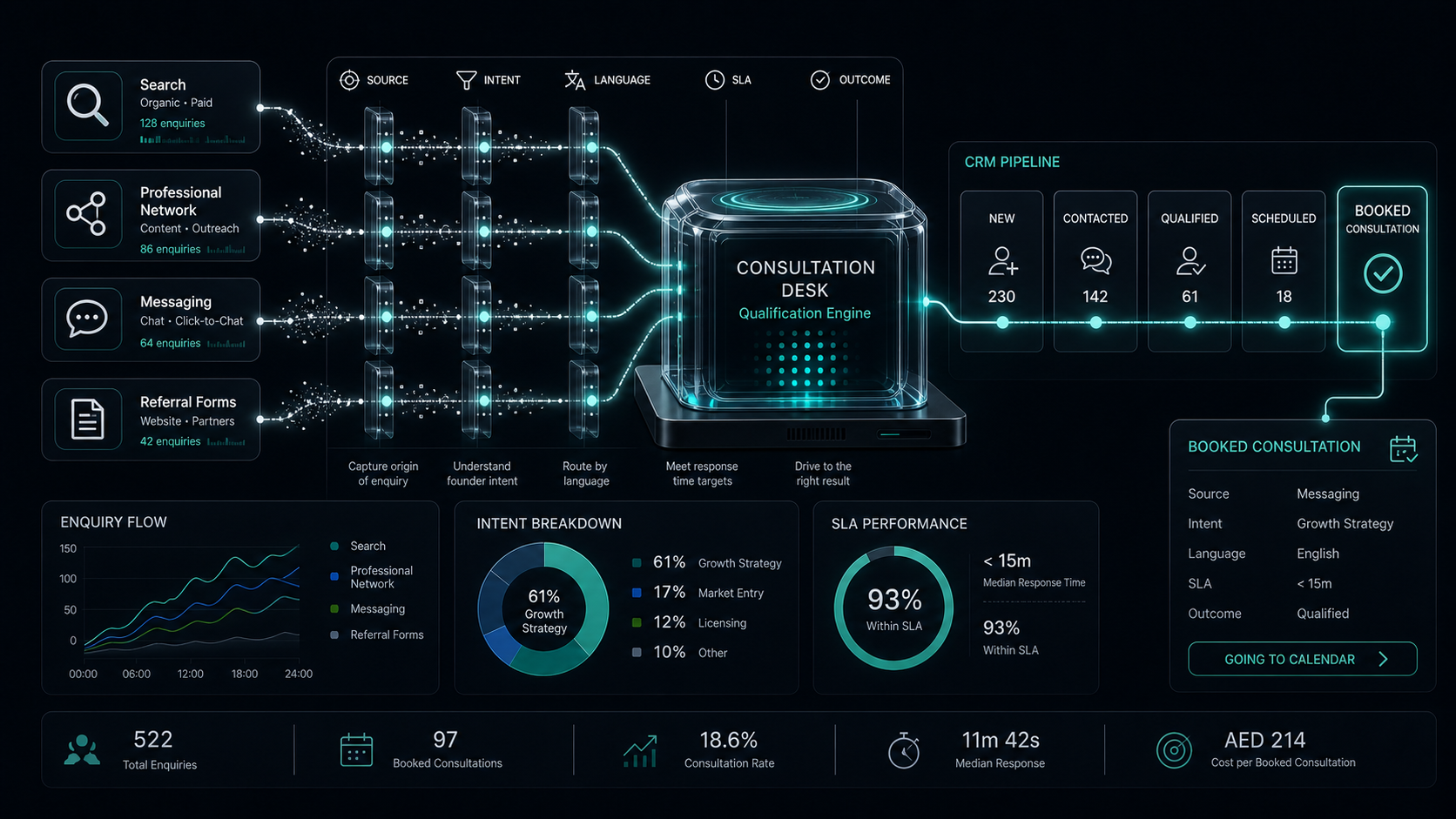
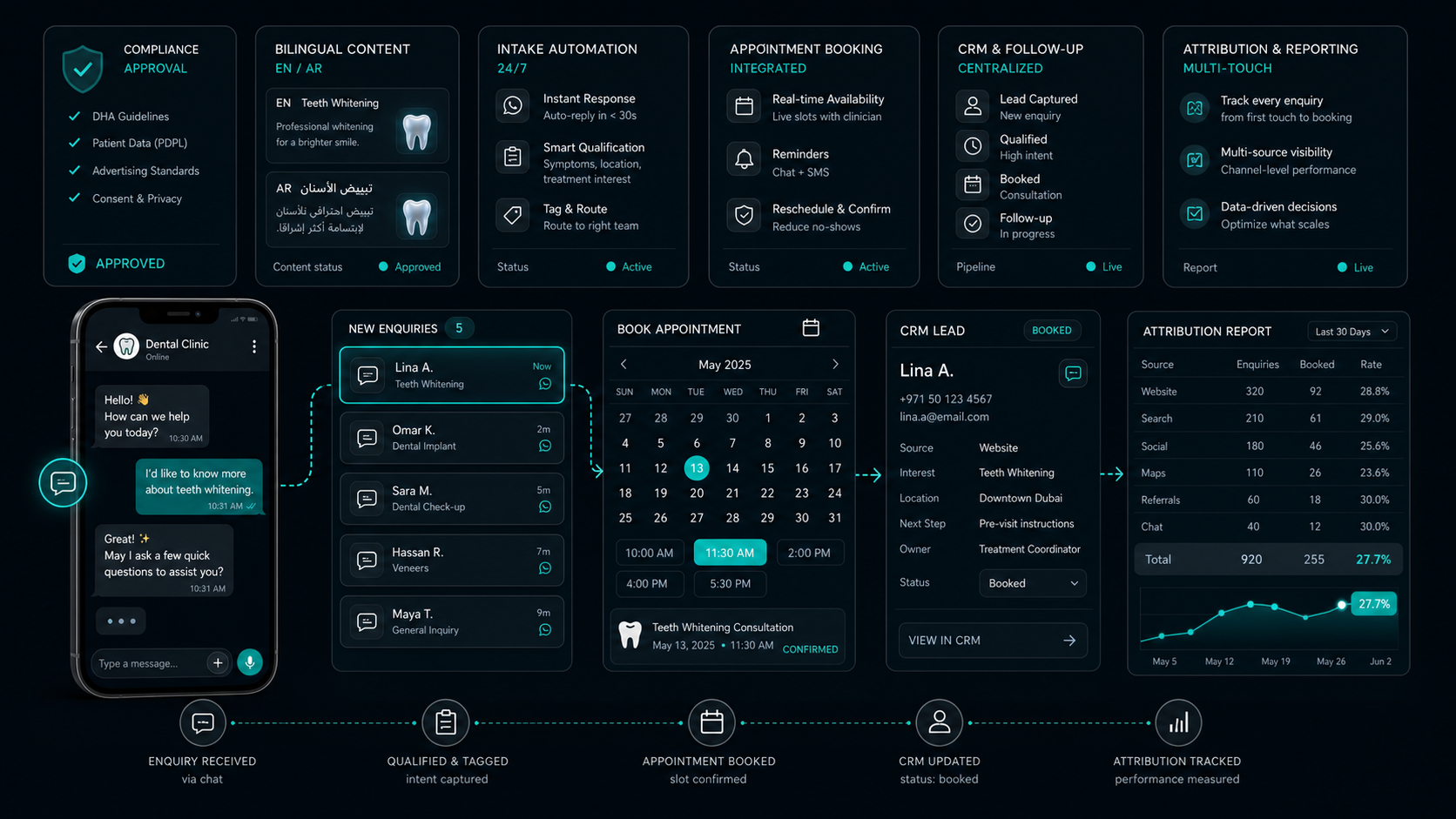
Consider an illustrative DIFC consultancy. A prospect reads an English or Arabic service page, submits a consultation form, moves to WhatsApp, enters the CRM and receives a calendar link. If an AI feature summarises the conversation or assigns a category, that is another handoff to map. Changing the privacy notice first would leave the firm guessing about its own live system. Mapping the journey first gives legal counsel something real to assess.
The proposal changes AI governance, not every lead form overnight
The 2026 proposal is aimed at AI-enabled Systems governance, certification and accountability. It is not a blanket instruction to rebuild every contact form.
The proposal would update Regulation 10 to strengthen expectations around safe, ethical, privacy-by-design and privacy-by-default development in an AI-native jurisdiction. The draft would replace the narrower reference to “principles” in Regulation 10.2.2(b) with the broader term “policy frameworks”. The draft would add “Safety” as a base concept for responsible Systems design. It would also clarify Systems certification obligations and the role, obligations and skills of the Autonomous Systems Officer, or ASO. Proposed Regulation 11 would empower the Commissioner to recognise accreditation and certification frameworks. These points come from the official proposal summary and consultation paper.
The decision rule is simple: inventory every real automated action, but do not label ordinary routing as regulated AI or exempt it by assumption. A service-line tag, a language tag, a transcript summary and a recommendation score may have different technical and legal characteristics. Record what each one does, then let counsel determine the applicable position.
Build one lead-capture map before changing copy
Your map should follow the enquiry, not the org chart. A prospect does not experience separate marketing, business development, IT and compliance departments. They experience one path from discovery to conversation.
Start at discovery
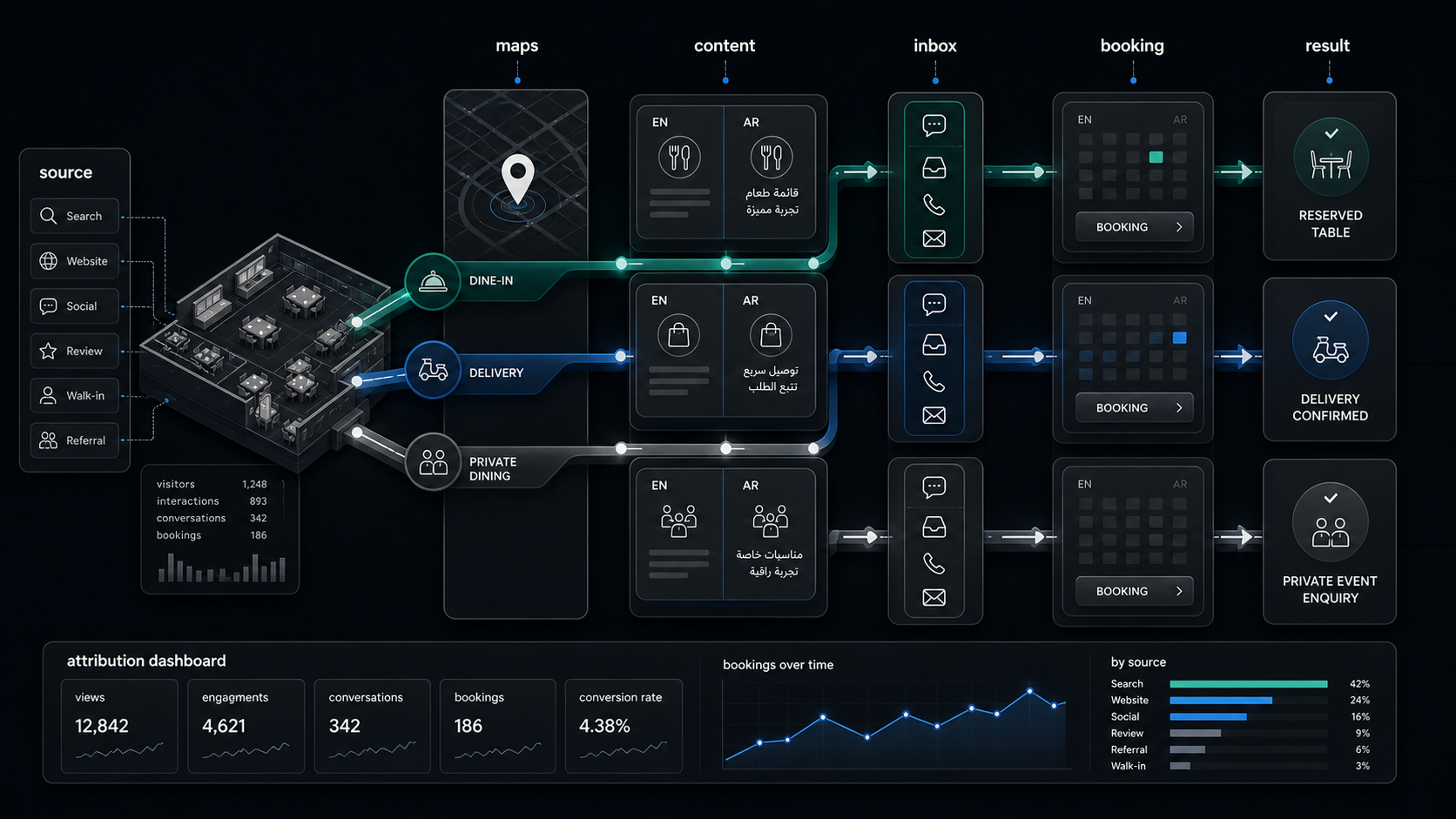
List the real entry surfaces: Google, LinkedIn, an English landing page, an Arabic landing page, a referral link, an event QR code or a direct WhatsApp message. Preserve the source and campaign information when the enquiry crosses into another system, or attribution disappears at the first reply.
Record the collection moment
For each form or chat, record the fields collected, the notice shown, any choice offered and the exact destination. A consultation form asking for a work email and service need is a different data event from a WhatsApp message containing a passport scan or financial document.
Trace every handoff
Follow the record through the form handler, shared inbox, WhatsApp provider, CRM, calendar, email platform, analytics layer and any outsourced support team. Record exports and spreadsheets too. A manual copy into a spreadsheet is still part of the live journey.
Identify automated judgement
Write down what automation changes. Does it only copy a record, or does it summarise, prioritise, reject, recommend, enrich or decide who sees the enquiry? Do not hide the answer behind a feature name such as “smart routing”.
Name an owner and evidence
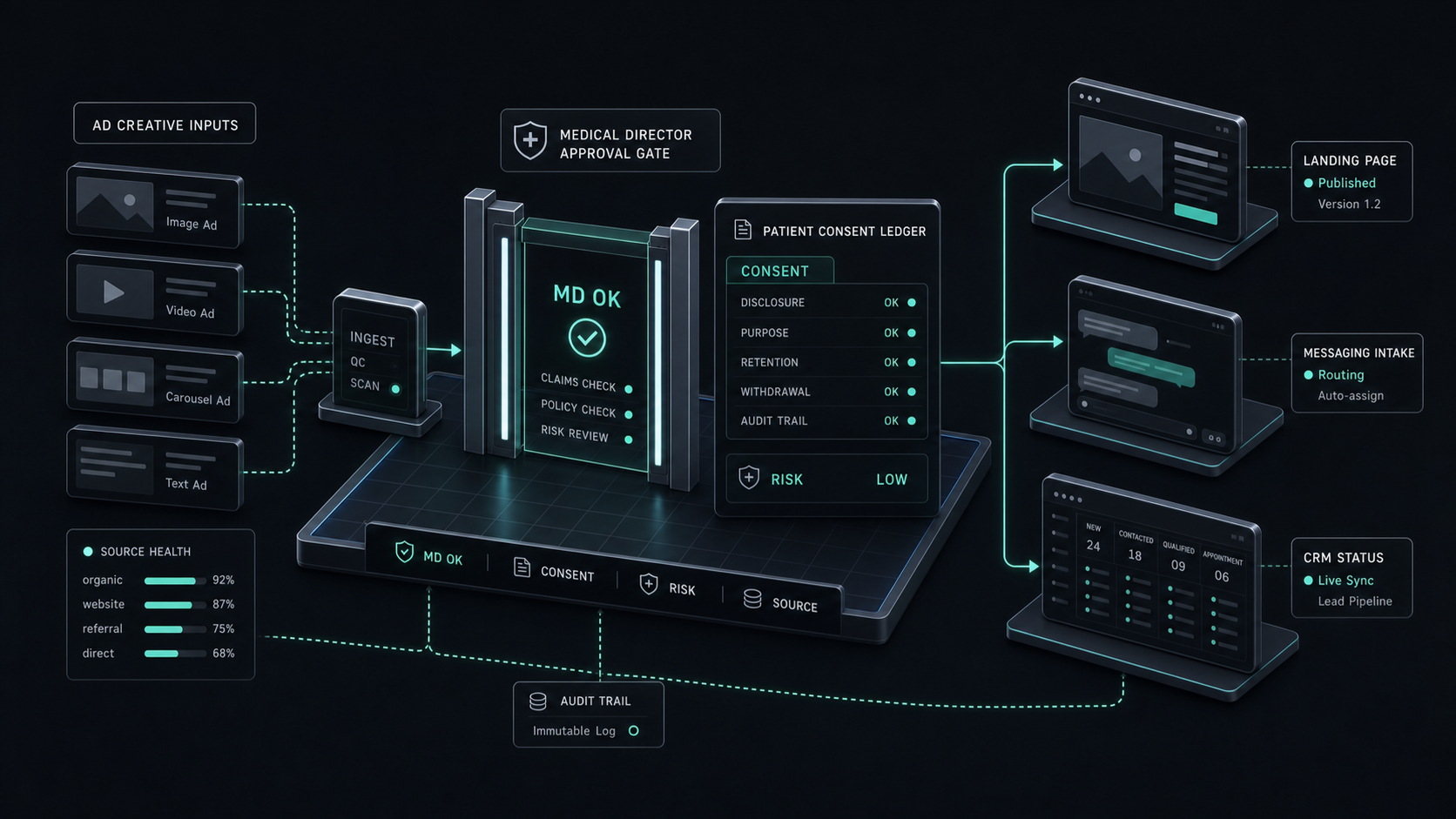
Assign a person who can produce the current form version, vendor terms, access list, system setting, approval, deletion rule and change log. “Marketing owns it” is not an owner; a named role with evidence is.
Use illustrative rows like these to test whether the map is specific enough:

Keep current obligations separate from proposed changes
The draft does not pause the current Data Protection Regulations. DIFC’s current Regulation 10 was enacted as part of updated Data Protection Regulations on 1 September 2023. The 2023 amendments addressed appropriate notices for marketing and communications, default cookie settings and conditions for consent in Regulation 9. The 2023 amendments also addressed personal data processed through digital and generative technology systems in Regulation 10. DIFC’s 2023 enactment notice sets out that baseline.
That distinction changes the work order. If your cookie control says one thing and the site does another, fix the current mismatch with counsel. If the Arabic notice omits a destination disclosed in English, align the live journey. If the CRM now receives a new data type or sends records to a new location, assess the current notification duty rather than waiting for the 2026 proposal.
For a business-setup firm, a new AI conversation summary might be operationally small but still deserves a documented review before rollout. Record the data sent, vendor, location, output, access and purpose. Then the adviser can decide whether the processing record, notice, vendor terms, impact assessment or notification needs to change.
The commercial routing layer still matters. Our business-setup consultation lead system shows how landing pages, WhatsApp and CRM should hand off without losing source or ownership. This consultation adds a governance lens to that same journey.
Turn the map into an owner-and-evidence register
A useful register tells a managing partner what exists, who is accountable and what can be proved. It should not become a legal vocabulary exercise.
DIFC’s official assessment tools cover notifications, high-risk processing, Data Protection Impact Assessments, controller and processor obligations, international transfers, privacy notices, rights requests, breach reporting, and marketing and electronic communications. A Data Protection Impact Assessment, or DPIA, is the structured review used to examine a processing activity’s privacy risks and controls.
DIFC also publishes sample templates for an online data-protection notice, a compliance checklist and Data Protection Impact Assessment, and a Record of Processing Activities. A Record of Processing Activities is the firm’s inventory of how personal data is used. DIFC states that its assessment tools and templates are guidance, do not determine the lawfulness of a specific activity, and are not legal advice. Use the official tools and templates to improve the evidence pack, then have qualified counsel settle the firm-specific legal position.

Do not buy or publish around a proposal
Do not turn regulatory uncertainty into rushed software, certification or website copy. These controls prevent most waste.
- Do not claim compliance with proposed Regulation 11. It is still proposed. Describe only the current framework and controls you can evidence.
- Do not decide the ASO question from a vendor pitch. The draft would clarify the ASO role, obligations and skills. Map the System and ask counsel how current Regulation 10 applies before treating a new title, course or service as mandatory.
- Do not trust a certification badge without checking the source. DIFC’s current Regulation 10 page publishes approved framework documents and a list of approved accredited certification bodies. Verify the body, scope and current status on the official Regulation 10 page.
- Do not add broad AI boilerplate to cover an unknown system. A notice that says everything and explains nothing is not a substitute for an accurate map.
- Do not switch off WhatsApp merely because a proposal mentions AI. The channel is only one part of the journey. The useful questions concern what is collected, where it goes, what automation does and what the prospect is told.
Run a readiness sequence the whole firm can follow
The work should move from evidence to legal decision to controlled release. That keeps a managing partner out of a circular debate between marketing, IT and compliance.
Label the sources
Place the current regulation, the current DIFC guidance, Consultation Paper No. 3 of 2026 and the future enactment notice in separate rows. Record the publication date and status so nobody quietly treats a draft as current law.
Map the live journey
Walk one English enquiry and one Arabic enquiry from discovery to consultation booking. Include WhatsApp, CRM, calendar, analytics, spreadsheets and vendor dashboards. Capture what happens, not what the process document says should happen.
Validate the current baseline
Have the legal or privacy owner review the live notice, cookie behaviour, marketing permissions, vendor position, transfer path and notification record against the current rules. Put each required correction into a named release ticket.
Classify automated actions
For every automated step, record the input, output, purpose, owner and effect on the prospect. Flag the steps that summarise, score, recommend, reject or materially alter access for deeper review.
Repair operational gaps
Remove abandoned exports, excessive access, unowned integrations and copy that no longer matches the system. These are useful fixes even if the proposed wording changes before enactment.
Create the final-text gate
Assign one owner to monitor DIFC’s enactment notice. When the final text and effective date are published, counsel compares them with the draft, approves the applicable changes and releases only the affected copy, controls, training and vendor requirements.
If the proposal creates a material ambiguity for your firm, the official comment deadline is 18 July 2026. Submit a concrete operating scenario through the consultation route, such as how a bilingual professional firm uses an AI summary inside a CRM, rather than offering a generic view on AI.
The growth payoff is a cleaner enquiry system
Compliance work is not a lead-generation tactic, but a truthful data map improves the system that produces and handles enquiries. Marketing can see which source created demand. Business development can see who owns the response. Operations can see every vendor and export. Legal can review the actual flow instead of a diagram made for a policy meeting.
For a DIFC professional firm, that means the English and Arabic journey can stay consistent from first page to WhatsApp follow-up, while attribution, access and approvals remain visible. The firm avoids two expensive extremes: adding friction everywhere because nobody understands the system, or moving fast with copy and automation nobody can defend.
The durable position is operational: know the journey, keep the current baseline correct, preserve evidence and wait for the final 2026 text before representing draft-specific compliance.
Are the June 2026 DIFC Data Protection amendments already in force?
No. They are proposals under consultation. DIFC says the proposed regulations will be enacted and come into force on a date it specifies and publishes after it considers feedback and any refinements.
What is DIFC Regulation 10?
Current Regulation 10 covers processing Personal Data through autonomous and semi-autonomous systems, including artificial intelligence. The 2026 consultation proposes refinements around safety, privacy by design, certification and the ASO role.
Should a DIFC professional firm change its privacy policy now?
Correct any statement that is inaccurate under the current rules, but do not present the draft Regulation 10 refinements or proposed Regulation 11 as enacted law. Map the live processing first and have counsel approve the current fix and the later final-text release.
Does adding an AI summary trigger a notification update?
DIFC says changes to processing, including new processing operations or different types of data or locations, must be notified through an update within 14 days of commencing the changed processing. Whether a particular summary feature changes your registrable particulars requires a fact-specific review by the firm’s legal or privacy adviser.
Book the Growth Sprint
Use the paid diagnostic to scope the live lead journey, consent surfaces, system handoffs and measurement before implementation.
Jul 14, 2026