Restaurant Marketing Agency Dubai: What a Venue Should Buy First
A Dubai restaurant owner buying agency support needs Google, EN/AR content, WhatsApp routing, review hygiene, and attribution before more ads.
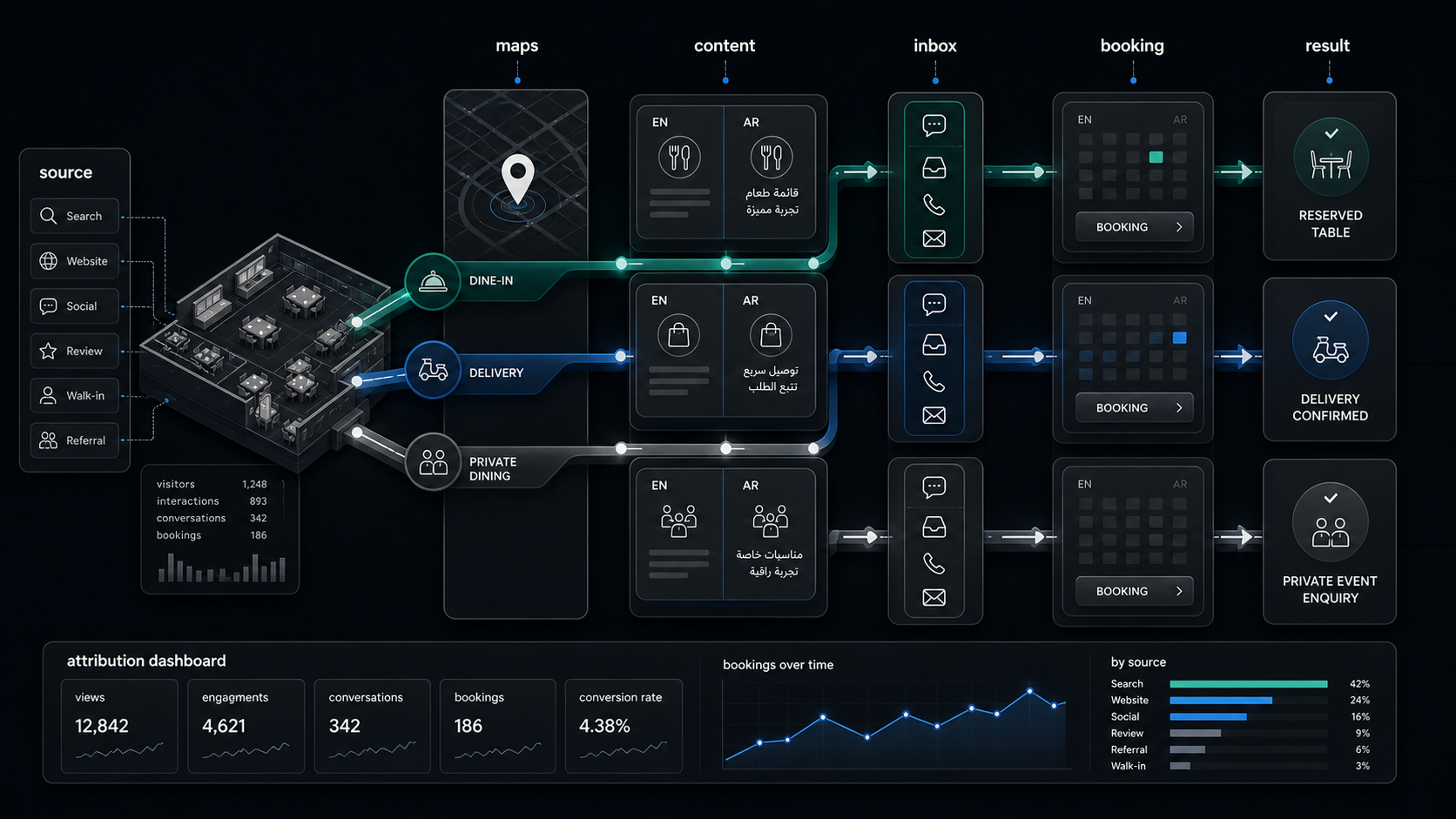
A Dubai restaurant should not hire a marketing agency for posts first. It should buy a venue growth system: a complete Google profile, bilingual content that sends guests to a booking path, WhatsApp or inbox routing that gets answered, review hygiene that stays clean, and attribution that shows which campaigns produced covers, delivery orders, private dining enquiries, or event leads.
The Verdict: Buy The System, Not The Posting Calendar
The right restaurant marketing agency in Dubai is the one that owns the path from discovery to a booked table, a qualified private dining enquiry, a tracked delivery order, or a repeat visit. A posting calendar is useful only when it sits inside that path.
The buying mistake is familiar: a venue pays for reels, captions, and ads, but the Google profile is incomplete, the menu link is stale, the Ramadan or brunch offer has no source tag, the Instagram DM is answered by whoever is free, and WhatsApp enquiries are mixed with supplier chats. Reach goes up, but the owner cannot tell whether the campaign produced guests or just activity.
Scope the agency like an operating system:
- Discovery: Google Search, Google Maps, Instagram, TikTok, delivery platform profile, partner lists, and direct referrals.
- Decision: menu, hours, location, parking, ambience, offer, private dining capacity, event package, dietary signals, and Arabic/English clarity.
- Action: reserve, call, WhatsApp, DM, order, join waitlist, book an event, or ask for a group quote.
- Follow-up: response owner, service-level target, enquiry tag, CRM or sheet capture, remarketing audience, and review request.
- Measurement: campaign source, medium, creative, landing page, enquiry status, booking status, and actual covers when the POS or booking tool can support it.
That is the difference between buying restaurant marketing and buying restaurant content. Content is one ingredient. The system is the commercial product.
Compare The Four Buying Models
The model you choose should match the risk you are trying to remove. A new cafe with weak visuals may need creative production first. A busy DIFC restaurant losing private dining enquiries needs routing and attribution first. A multi-location group needs governance, campaign rhythm, and location-level reporting.
The decision rule is direct: if the problem is weak visual identity, start with content. If the problem is empty seats, untracked ads, unanswered messages, weak Google visibility, and no Arabic/English offer rhythm, buy the managed system.
For a Dubai restaurant, the route often has to cover tourists, residents, nearby office workers, hotel guests, families, Arabic-speaking guests, English-speaking guests, and private event buyers. A one-channel agency can help, but only if the handoff is defined. A managed partner is the cleaner choice when the owner wants one team accountable for how discovery becomes demand.
Google Business Profile Is The First Conversion Surface
Google Business Profile is a conversion surface for restaurants, not a directory listing. For many Dubai venues, the guest does not begin on the website. They search Maps, compare photos, check opening hours, read reviews, check the route, then call, reserve, or move to Instagram.
Google says local results are mainly based on relevance, distance, and prominence, and that complete and accurate business information makes a business more likely to appear for relevant local searches. Google also calls out practical profile work: address, phone number, business type, details such as parking or Wi-Fi, verification, current hours, review replies, and photos or videos. Source: Google Business Profile local ranking guidance.
For a Dubai restaurant, that becomes a specific weekly checklist:
Fix the profile fields
Check venue name, category, phone, website, reservation link, location pin, hours, special hours, parking notes, service options, and current photos. If brunch, business lunch, terrace season, shisha, private dining, or delivery matter commercially, the profile must help a guest decide.
Match Google to the offer calendar
When a lunch set, ladies night, tasting menu, Ramadan menu, New Year package, or private dining offer is active, the landing page and social posts should match the same terms. A guest should not see one offer on Instagram and a different promise on Google.
Give review replies an owner
Replying to reviews is not admin theatre. It shows the venue is alive, gives future guests extra decision detail, and catches service issues before they become reputation drag.
Report profile actions separately
Calls, direction requests, website clicks, and booking-link clicks should be reviewed as venue demand signals. They are not the same as impressions.
The restaurant agency should not treat Google as an SEO afterthought. It is often the closest surface to a visit.
The Content Brief Must Be EN/AR And Offer-Led
Restaurant content should make a guest choose a visit occasion. Beautiful food shots matter, but the commercial job is to connect the right guest to the right reason to come now.
For Dubai, the content brief should be built around occasions:
- Weekday lunch: nearby offices, quick service, parking, set menu, group table availability.
- Weekend dining: families, terraces, entertainment, valet or parking, booking urgency.
- Private dining: capacity, minimum spend policy if applicable, AV, menu style, location, enquiry path.
- Tourist discovery: signature dishes, neighbourhood, landmarks without relying on skyline cliches, dietary clarity.
- Delivery and takeaway: hero items, packaging confidence, ordering path, time-sensitive offers.
- Arabic-speaking guests: Arabic captions, menu highlights, offer clarity, and culturally aware timing around Ramadan, Eid, National Day, and school calendars.
The agency should turn that into a content-to-conversion grid, not a monthly moodboard:
This is where many restaurant packages are too soft. They promise content volume, but the venue needs offer coverage, language coverage, and action coverage. A Dubai owner should be able to look at the calendar and see which commercial moments are being served.
WhatsApp And Inbox Routing Decide Whether Ads Leak
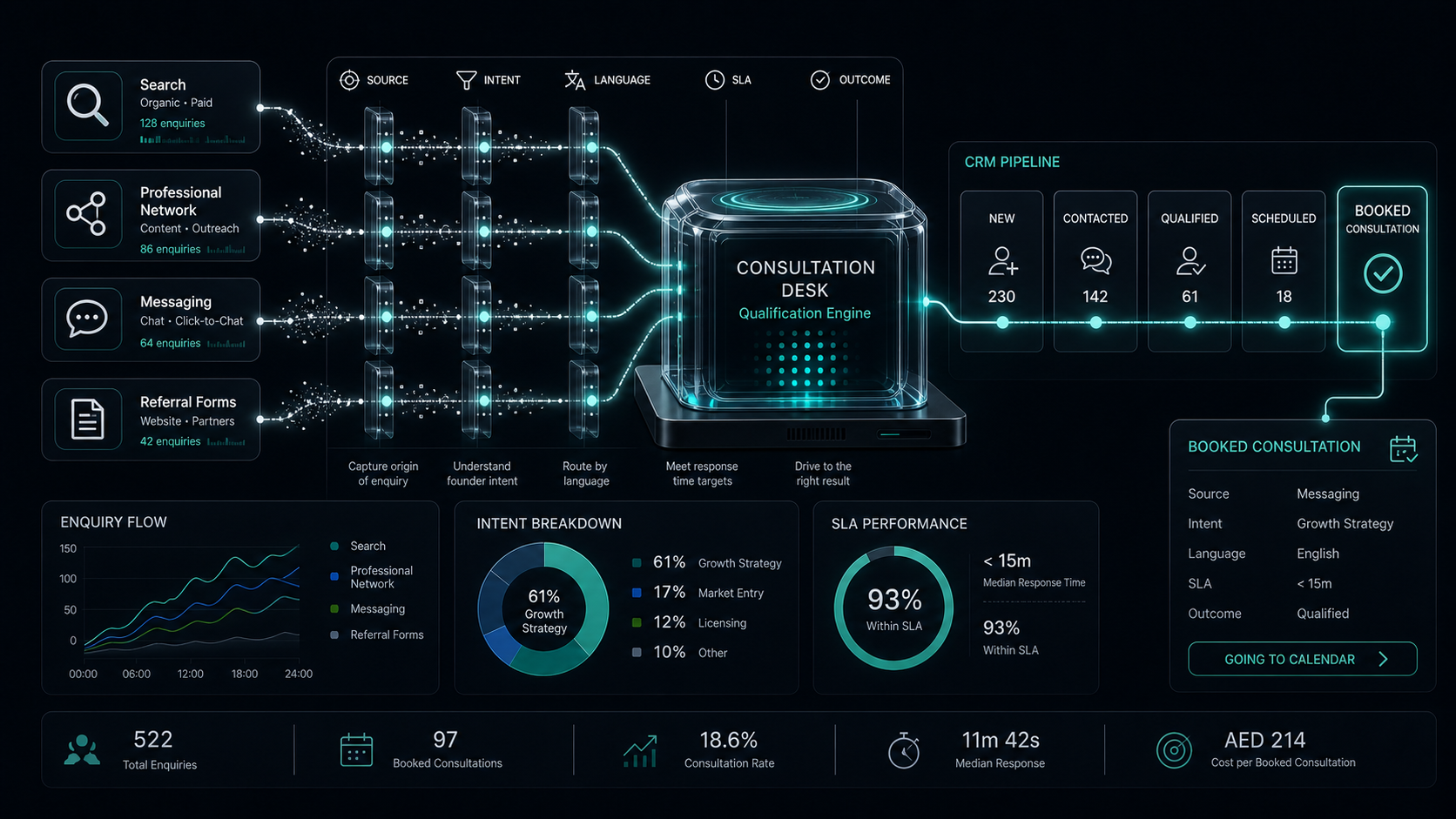
The highest-return fix is often message handling, not new ad creative. If a diner clicks from Instagram, Facebook, or WhatsApp and nobody owns the response, the campaign has already leaked.
Meta says ads that click to message send people who click an ad directly into a conversation with a business in Messenger, Instagram, or WhatsApp. It also says businesses that message customers on two or more Meta technologies can select multiple message destinations while creating the ad. Source: Meta click-to-message ad guidance.
That matters for Dubai restaurants because the enquiry is not always a simple booking. It might be:
- "Do you have a table for six tonight?"
- "Is the terrace open?"
- "Can we bring children?"
- "Do you have a business lunch?"
- "Can I book for a birthday?"
- "Do you have vegetarian options?"
- "Can you host a company dinner for 30?"
Each enquiry type needs a route. The simplest useful setup is:
WhatsApp is useful when the templates and language are controlled. Meta says WhatsApp templates are WhatsApp Business Account assets sent through the Cloud API or Marketing Messages API, and template messages are the only type of message that can be sent to WhatsApp users outside a customer service window. Meta also says each template must be categorized as authentication, marketing, or utility, and that template language codes must be assigned because Meta does not translate template strings and variables for the business. Source: WhatsApp template fundamentals.
For a restaurant, the practical rule is simple: do not let the agency run click-to-message campaigns until the reply path is written down. The campaign should define who answers, what they say, what gets tagged, when a manager is pulled in, and how the enquiry is counted.
The same routing principle appears in our WhatsApp and CRM lead routing rule, but restaurants need a lighter, faster version that respects service hours and booking urgency.
Reviews Are Growth Assets, But Paid Review Tactics Are A Risk
Review growth should be earned, requested cleanly, and answered consistently. A restaurant that tries to buy ratings is putting a core discovery surface at risk.
Google says Maps contributions should reflect a genuine experience at a place or business, and fake engagement is not allowed. Google also says merchants must not offer incentives such as payment, discounts, free goods, or services in exchange for posting, revising, or removing a review. Source: Google prohibited and restricted content policy.
That gives a restaurant owner a clear agency boundary:
- Good: staff ask happy guests to leave an honest review after service.
- Good: the venue replies to positive and negative reviews with useful detail.
- Good: the agency reports review themes, not only star average.
- Bad: paid review packages.
- Bad: discounts in exchange for reviews.
- Bad: asking staff to push specific wording.
- Bad: filtering only happy guests into the review request.
The useful agency role is process design. Where should the review request happen? Who replies? Which complaints get escalated? Which menu, service, seating, or delivery issues keep recurring? Reviews are not only reputation signals. They are customer research sitting in public.
Attribution Is The Buying Control
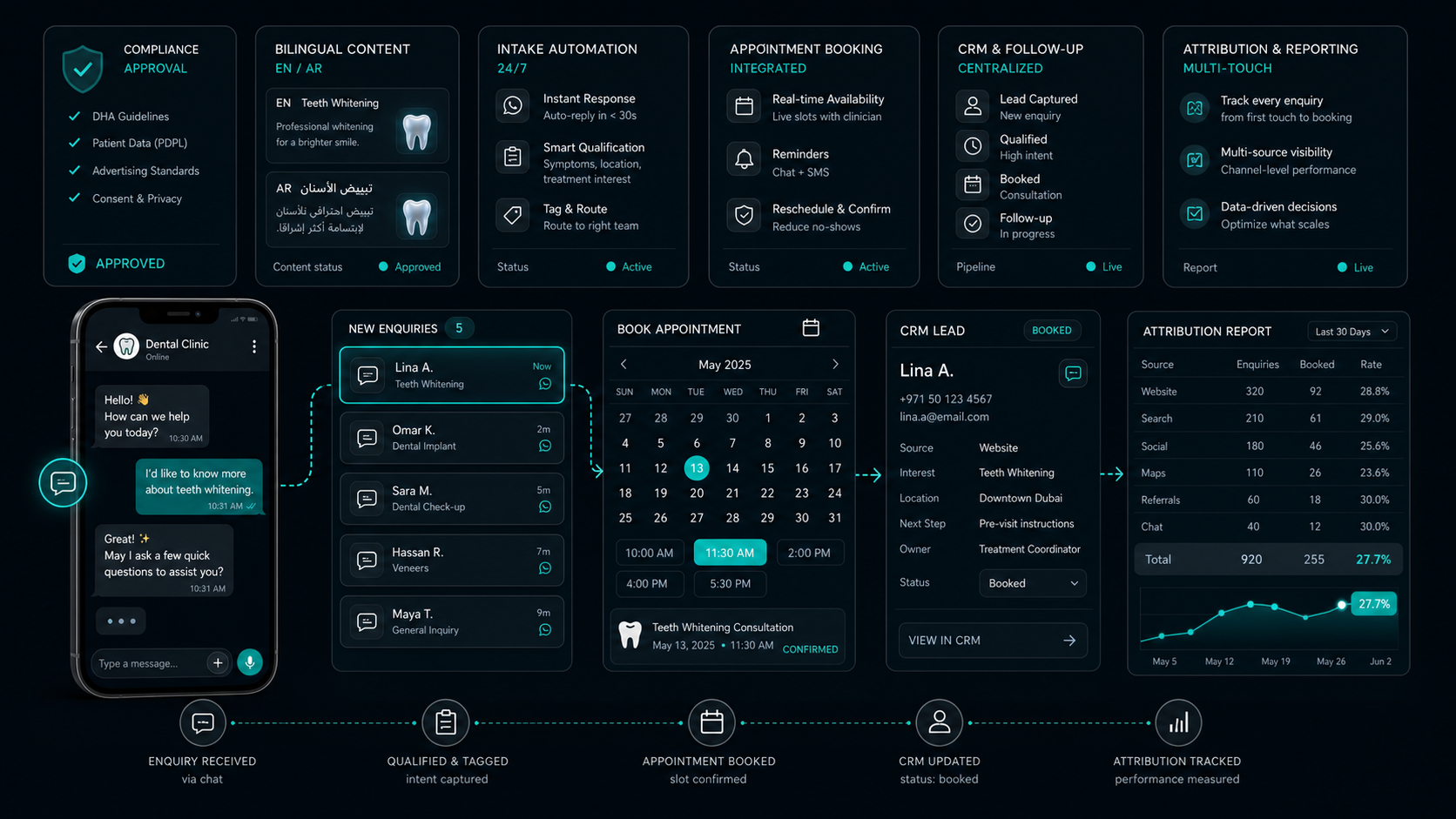
Attribution is how a restaurant owner decides whether to keep funding the agency. Without source tracking, every channel argues for credit and nobody can prove the path.
Google Analytics says UTM campaign parameters added to destination URLs let Analytics show which campaigns refer traffic, and when adding URL parameters, Google says to always use utm_source, utm_medium, and utm_campaign. Source: Google Analytics custom campaign URL guidance.
For a Dubai venue, the naming system does not need to be complex. It needs to be consistent:
Then define the reporting rules before the agency starts:
- Which actions count as a lead: WhatsApp enquiry, booking form, call, private dining form, delivery click, or event quote request.
- Which actions count as qualified: party size, date, location, budget range, phone number, or clear buying intent.
- Which actions need manager follow-up: private dining, group booking, complaint recovery, partnership, or media request.
- Which campaigns get stopped: high click volume with low qualified enquiries, repeated poor-fit leads, or no measurable action path.
This is also where the agency should connect Google profile work to local discovery. The same discipline behind local SEO for professional services applies to venues: profile hygiene, useful location pages, review process, and channel-specific tracking beat vague visibility reports.
The owner does not need a complicated dashboard on day one. They need a weekly sheet or CRM view that shows source, offer, enquiry type, owner, response status, and result. Once that works, deeper reporting has something real to measure.
The 30-Day Agency Buying Checklist
The first 30 days should prove whether the agency can operate the venue growth system. Do not judge the first month only by content quantity. Judge it by whether the commercial path is cleaner.
Use this checklist before increasing spend:
Week 1: Audit the route
Map Google, Instagram, TikTok, website, delivery links, booking tools, WhatsApp, DMs, calls, reviews, and current reporting. Identify every place a guest can ask a question and every place the team currently loses ownership.
Week 2: Fix the visible surfaces
Clean Google profile fields, hours, photos, reservation link, website offer pages, Instagram bio links, highlight structure, Arabic/English offer clarity, and private dining enquiry paths.
Week 3: Launch the content-to-action calendar
Ship content around concrete occasions: lunch, weekend, terrace, delivery, private dining, events, seasonal offers, and Arabic-speaking guests. Every post gets a next action and an owner.
Week 4: Measure and decide
Review enquiries by source, response time, qualified status, booking result, and offer. Increase spend only where the path works. Fix routing before funding channels that still leak.
The red flag is an agency that asks for more ad budget before it has cleaned the profile, routing, review process, and reporting. The green flag is a partner that can say, "Here is where demand enters, here is who answers, here is what we tag, here is what converted, and here is what we stop."
FAQ
What should a Dubai restaurant marketing agency manage first?
It should manage the route from discovery to action first: Google profile hygiene, offer-led EN/AR content, booking or message paths, review process, and source tracking. Content volume comes after the route is usable.
Is social media enough for restaurant marketing in Dubai?
No. Social media is useful when it drives bookings, WhatsApp enquiries, private dining leads, delivery orders, or repeat visits. A venue that only buys posts will struggle to see which content creates demand.
Should a restaurant use WhatsApp for booking enquiries?
Yes, if WhatsApp is owned like a sales channel. Define who replies, which templates or scripts are approved, how enquiries are tagged, and when a manager takes over.
What is the main red flag when choosing a restaurant marketing agency?
The main red flag is a package that sells posts, impressions, or vague awareness while avoiding booking paths, reviews, response time, attribution, and source-level reporting.
Apply for a Partnership
Build a managed restaurant growth system across website, Google, bilingual content, WhatsApp or inbox routing, and weekly attribution.
Jun 29, 2026