Same-Day Dental Implant Leads in Dubai: Build the Booking Path Before Ads
A Dubai dental clinic playbook for compliant same-day implant campaigns, WhatsApp routing and attended-consultation attribution.
Do not advertise "same-day dental implants" as a treatment promise. Advertise a candidacy assessment, then route every enquiry through a clinician-owned booking path before anyone discusses timing.
The offer is an assessment, not a same-day promise
The campaign should sell access to an assessment, not certainty about treatment or timing. That distinction protects the patient, gives the treating dentist control of the clinical decision, and gives the clinic a cleaner conversion event to measure: an attended candidacy consultation.
Dubai Health Authority, or DHA, issued updated Dubai dental guidelines in March 2026, including a dedicated Implant Dentistry guideline. Marketing should therefore stop at the point where clinical assessment begins. A coordinator can arrange that assessment. An ad, form or automated reply cannot decide who is suitable.
DHA's published social-media advertising standard makes the copy boundary unusually clear. It says absolute and exaggerated claims such as "assured success," "100%" and "immediate results" must not be used. It also requires content to be accurate, substantiated and balanced with relevant risks and benefits. The safe campaign promise is therefore not same-day implants for you. It is find out whether a same-day option may be suitable for you.
Consider a patient who searches after losing a tooth and messages the clinic in Arabic. The campaign has done its job when the patient understands that timing depends on assessment and books the right consultation. It has failed if the ad creates certainty that the front desk then has to retract.
Build the landing page around the decision path
A strong landing page answers the decisions that stand between high intent and a booked consultation. It does not turn the page into a treatment brochure or hide the assessment dependency in small print.
Set one honest promise
Open with a candidacy-led proposition such as "Assess your same-day dental implant options in Dubai." The primary action should book or request an assessment. Do not place a procedure-booking button beside language that implies every visitor can receive treatment on the advertised timeline.
Name the clinical decision-maker
Show the treating professional's current, verifiable credentials and the clinic location connected to the campaign. DHA's implantology privilege requirements state that completing an approved implantology course does not itself authorize practice; the privilege must be added to the professional's license. Marketing should publish only credentials the clinic has verified as current.
Explain what the assessment decides
Tell the visitor that the clinician will review suitability, available options, expected sequence, risks, benefits and alternatives. Keep the language at decision level. The page should prepare the patient for a consultation, not provide an online diagnosis.
Use proof with boundaries
Use facility details, verified professional credentials, a clear consultation process and approved educational material. Patient stories, testimonials, images and before-and-after media need their own consent and presentation controls. A gallery is not a shortcut around those obligations.
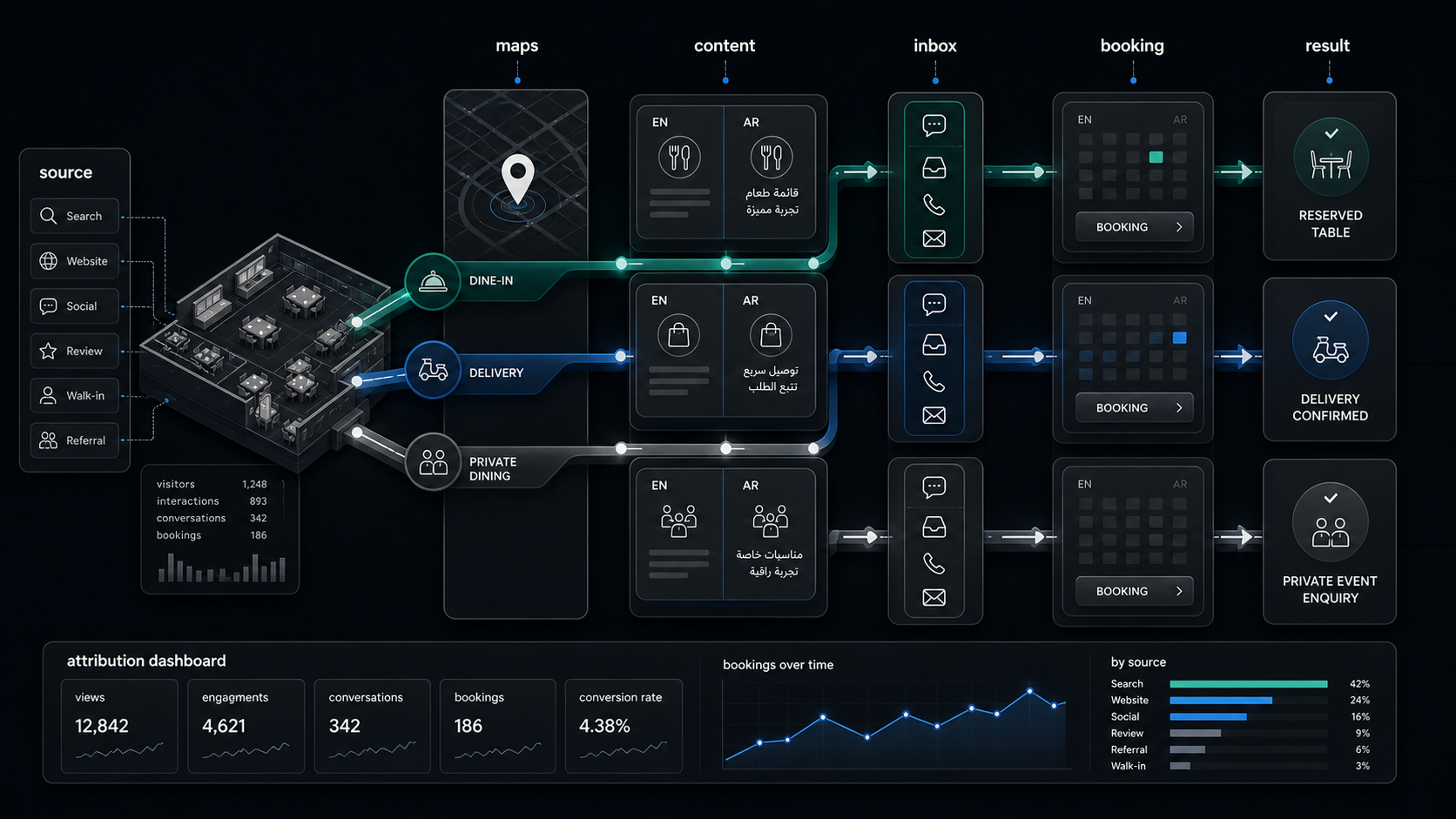
Keep English and Arabic equivalent
Approve the English and Arabic journeys as one claim set. The Arabic page must not become more certain, urgent or promotional than the English page. Store both approved versions under the same campaign record so later edits cannot drift apart.
The wider compliant dental lead system should use the same promise from ad to page to WhatsApp. If the ad says "assessment," the page says "instant treatment," and the coordinator says "you qualify," the clinic has three different offers and no defensible approval trail.
Put a compliance gate before traffic
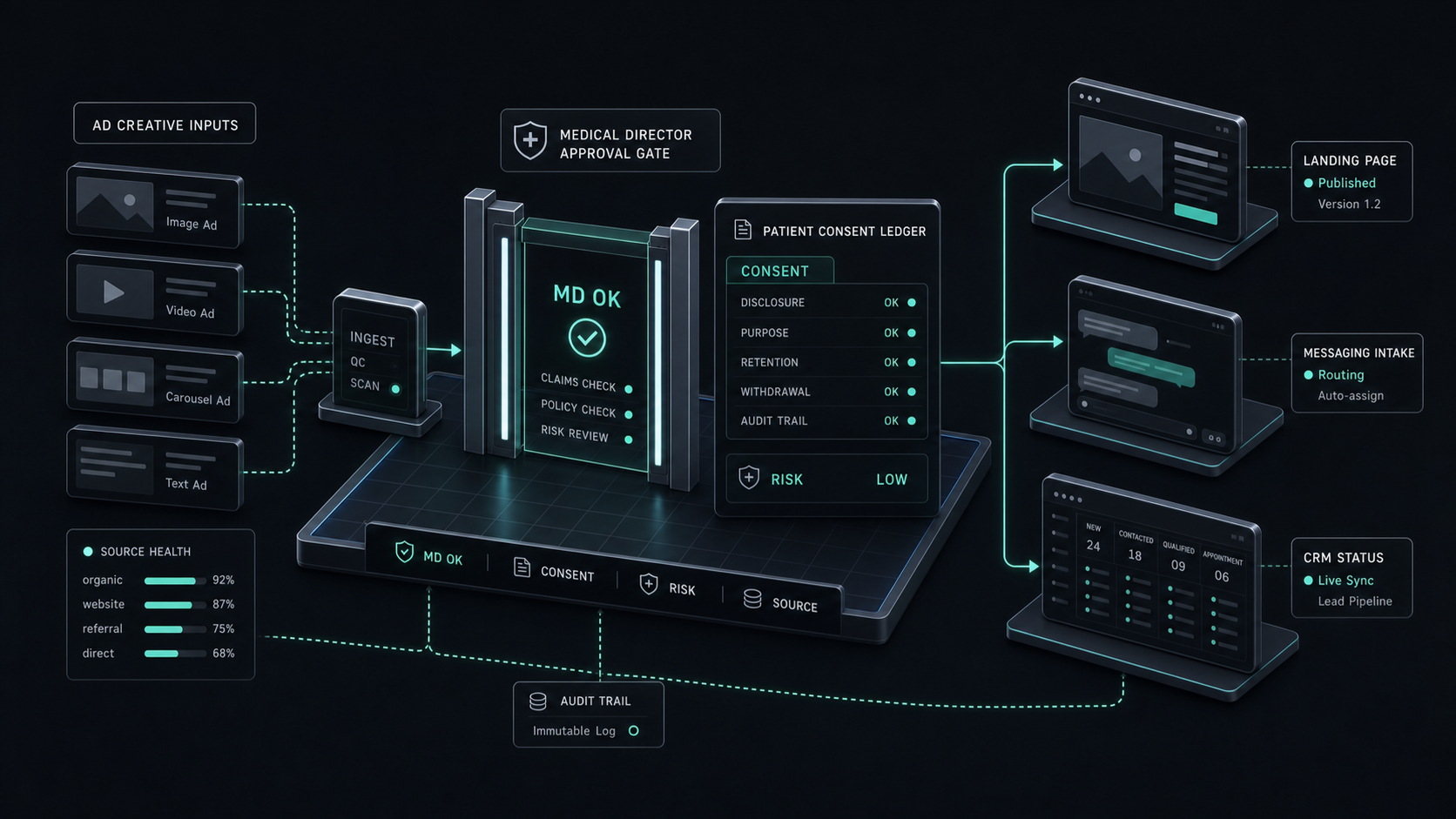
No campaign should enter an ad platform until one accountable owner can show the approved claim, evidence, license reference and patient-media status in one record. A shared folder full of loosely named files is not an approval system.
DHA issued Circular 1451 on health-advertisement content on social media in August 2025. The detailed V1.1 standard remains published with an August 2027 revision date. Treat both as current pre-launch checks: review the newer circular and verify every exact claim against the detailed standard and any other applicable rule.
The Ministry of Health and Prevention, or MOHAP, also operates the live health-advertisement licensing process. Its process says the submitted material is reviewed and may be approved, returned for amendments or rejected. Approved material must carry the advertisement license number, and that license does not remove requirements imposed by other authorities.
Build the gate around these records:
- Campaign master: exact English and Arabic copy, creative, destination page and WhatsApp opening message.
- Claim file: the source and clinical owner for each treatment, timing, technology or outcome statement.
- Medical Director approval: a dated approval for material naming the facility, location, service or outcome.
- MOHAP record: current approval status and the license number placed on the approved material.
- DHA check: review against Circular 1451 and the published V1.1 content standard.
- Patient-media record: separate written consent for every patient image, video, statement or testimonial used.
- Launch version: the exact asset that went live, with its destination and approval references.

DHA's standard requires written, documented consent for patient pictures, images, videos and statements. Its before-and-after rules are stricter than adding a tiny disclaimer: the images should show the same person, use the same lens, avoid image enhancement, include the specified outcome-variation statement and risks, and present the statement in the same font size as the rest of the advertisement. The 2024 DHA consent guidelines also added separate consent for medical advertising on social media.
The practical default is simple: launch without patient media until the clinic can produce the right consent and the final approved presentation. A clean clinician-led page will usually convert more trust than an aggressive gallery with uncertain provenance.
Route the enquiry without turning WhatsApp into a clinic
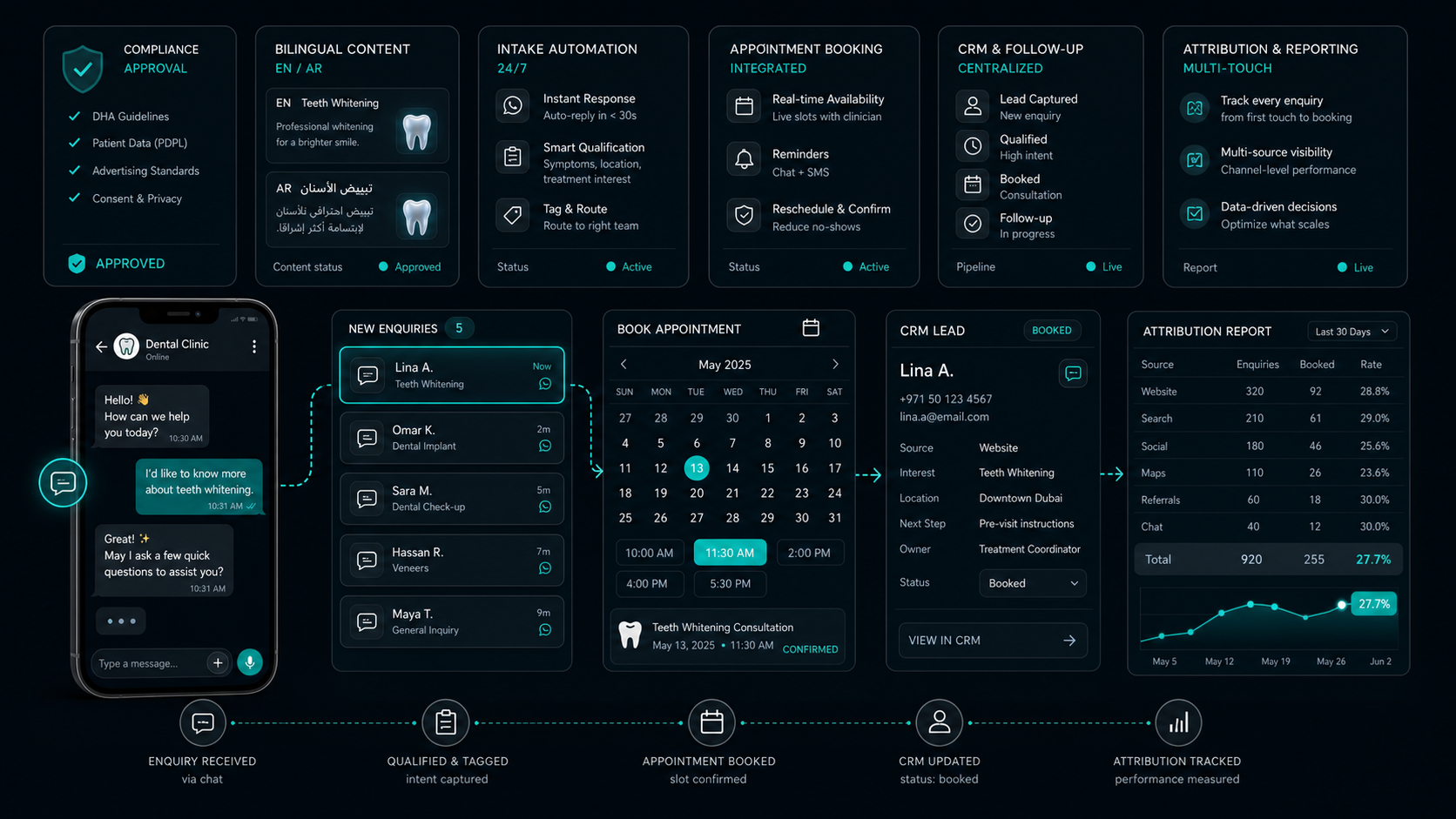
WhatsApp should move the prospect to an assessment, not collect an uncontrolled medical history or issue a suitability verdict. The coordinator's job is contact, expectation-setting and booking. Clinical intake belongs in the clinic's approved clinical workflow.
The UAE government's Personal Data Protection Law summary says electronic personal-data processing is subject to security and confidentiality duties, generally requires consent unless an exception applies, gives people correction and restriction rights, and controls cross-border transfers. The same official page points to the federal law regulating information and communication technology in the health sector.
For the marketing handoff, capture only what the team needs to contact and book:
- name and preferred contact route;
- preferred language;
- request for a dental implant assessment;
- preferred consultation window;
- permission to be contacted about this enquiry; and
- source and campaign identifiers added by the system, not typed by the patient.
Do not invite scans, detailed medical histories or intimate health descriptions into a generic marketing form or an ungoverned inbox. If the clinic needs clinical material before the visit, transfer the patient into the clinic's approved intake route and explain why that channel is being used.
That reply does four jobs without crossing the clinical line: it acknowledges intent, preserves assessment, offers a next step and confirms language. It does not diagnose, quote an unsupported outcome or push the patient to send health details into the chat.
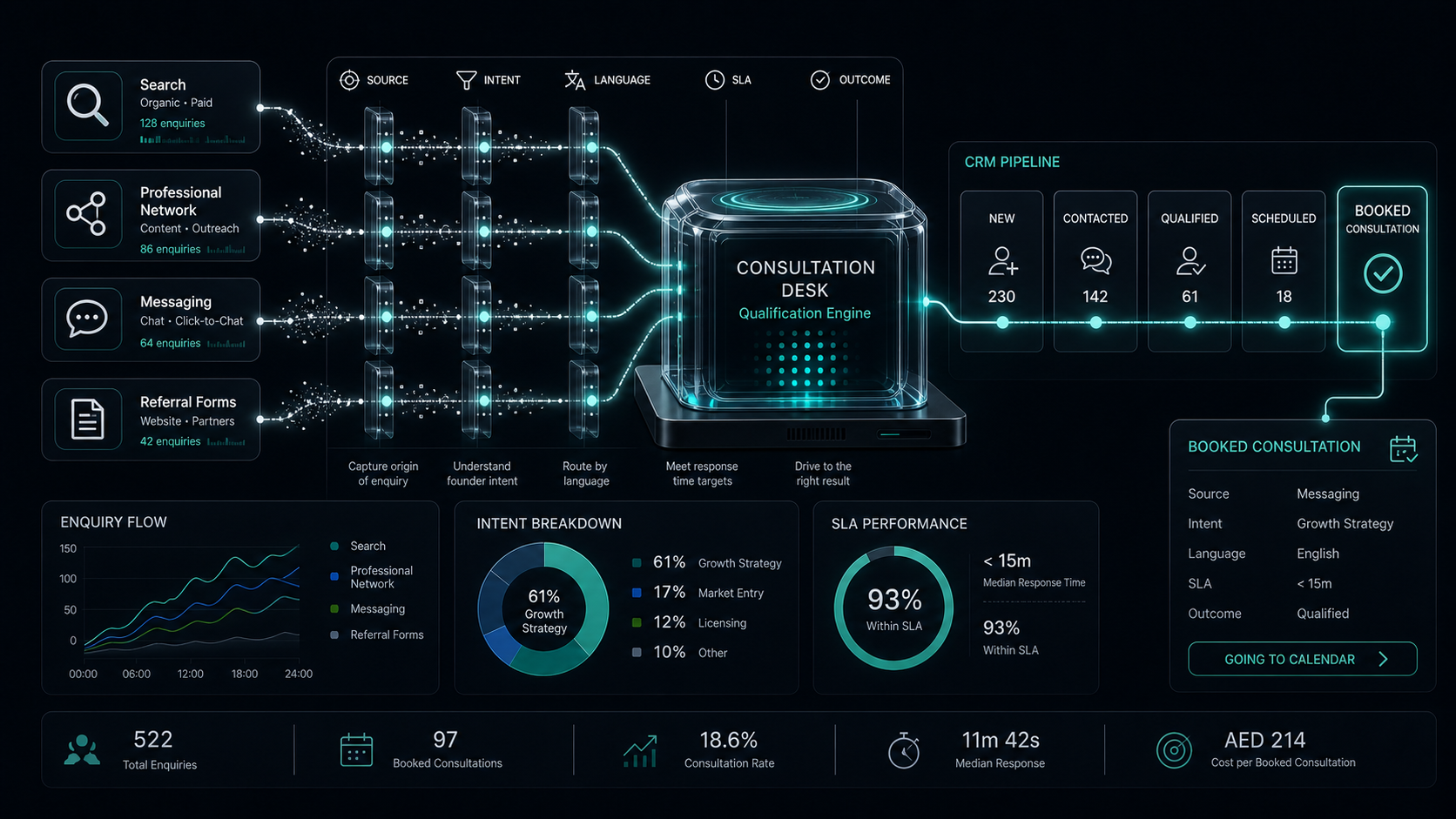
The CRM handoff should create one contact and one active opportunity for the enquiry. Record the original source, language, campaign, coordinator, booking state and next action. Keep free-text notes out of the marketing record when a structured status will do. If the same person arrives through search, Instagram and WhatsApp, merge the attribution history rather than making the front desk chase duplicate records.

The clean handoff is campaign context forward, clinical judgment later. This is the same principle that keeps an automated reply useful without pretending it is care.
Measure attended consultations, not chat volume
The campaign should be judged by qualified, attended consultations that can be traced to a source. Message count alone rewards noise and hides the point where a real patient journey breaks.
Define each stage before launch:
Keep the clinician outcome deliberately broad in the marketing view. Marketing needs to know whether the journey reached an appropriate next step, not the patient's detailed condition. The clinical record remains the source for care.
An illustrative path makes the leak visible. A prospect sees an English search ad, chooses the Arabic landing page, starts WhatsApp and books an assessment. If the CRM records only "WhatsApp," paid search loses credit and Arabic-page performance disappears. If it preserves the original campaign, landing language and attended outcome, the owner can decide which message and route create consultations.
Report English and Arabic journeys separately, but use one shared definition of a qualified enquiry and attended assessment. Otherwise one language can look stronger simply because its coordinator uses looser status labels.
Fix the failure modes before scaling
Most campaign waste appears before the media budget becomes the problem. Fix claim control, handoff and attribution first, then add traffic.
Use the DHA clinic advertising checklist as the broader approval reference, then add the service-specific claim file for same-day implant language. The point is not more paperwork. It is one defensible path from approved claim to attended consultation.
Questions clinic owners should be ready to answer
How much do same-day dental implants cost in Dubai?
There is no responsible campaign-wide answer without the clinic's current price sheet and a clinician-defined scope. If the clinic publishes a price, the approved material should make inclusions, exclusions and assessment dependency clear rather than using a low headline that the consultation cannot support.
Can dental implants be done the same day?
The campaign should say that same-day options are assessed by the treating clinician, not that every patient qualifies. Marketing converts the enquiry into that assessment and stops there.
Can you get implants in 24 hours?
A clinic should not let "24 hours" imply that every patient is eligible or that the entire treatment is complete. Define exactly what the treating clinician may offer, what remains conditional and what follow-up is required before approving that phrase.
What are the disadvantages of immediate-loading implants?
Risks, benefits and alternatives belong in the clinician-led consultation. DHA's advertising standard requires accurate, substantiated content that contains risks and benefits; the page should signal that balanced discussion without turning promotional copy into individual treatment advice.
Apply for a Partnership
Build and run the compliant clinic website, bilingual content and WhatsApp-to-CRM system as one managed growth partnership.
Jul 14, 2026