Meta Business Agent Pricing: What Dubai Brokerages Should Test Before 1 August
Meta Business Agent moves to token pricing on 1 August 2026. Use this Dubai brokerage test for EN/AR leads, CRM handoff and approved listings.


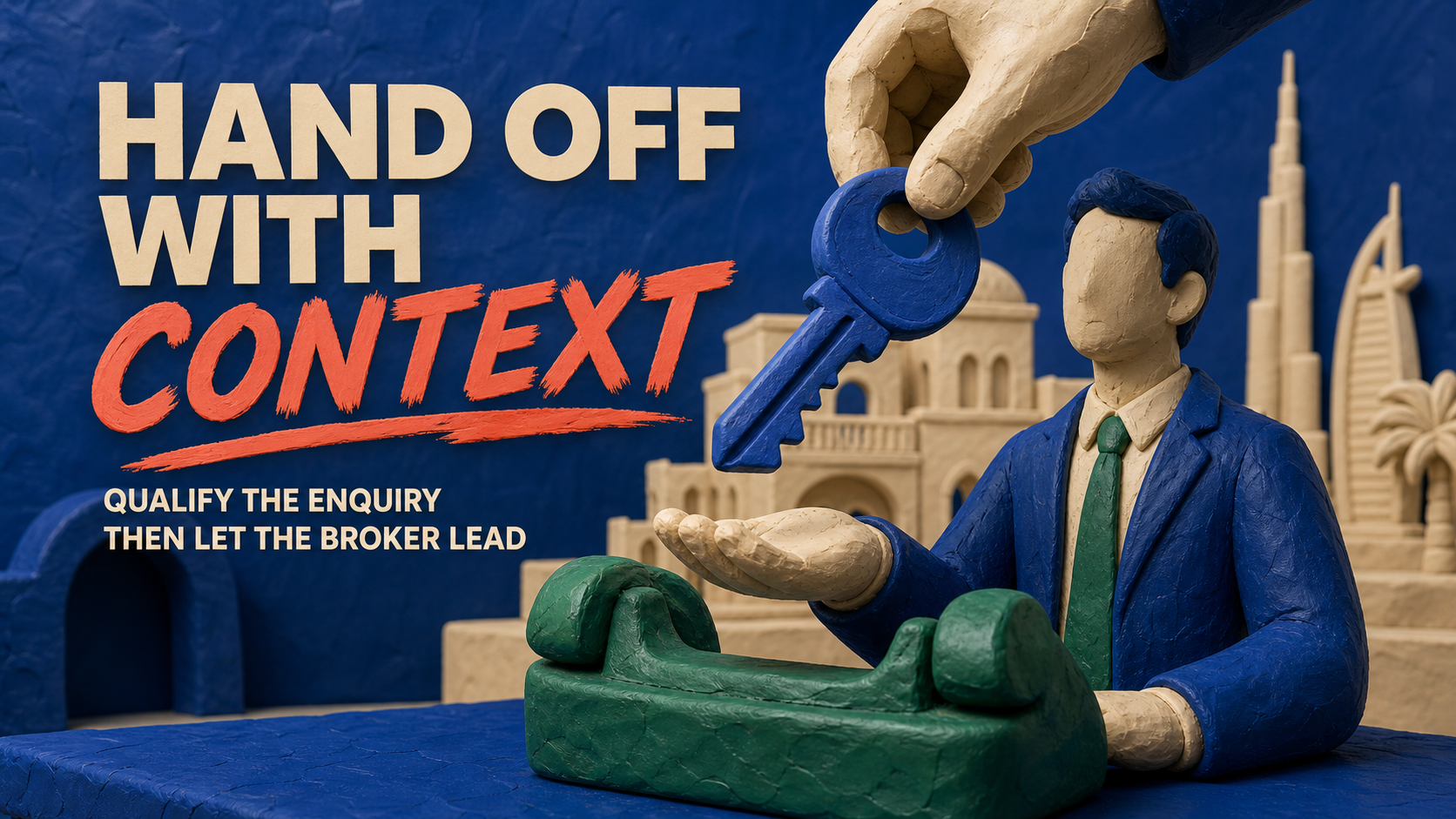
Meta starts charging for Meta Business Agent messages by token on 1 August 2026, but price is not the first risk for a Dubai brokerage. Test approved property answers, Arabic and English qualification, CRM ownership, and human handoff before the agent touches live enquiries.
The verdict: test the reply layer, keep the CRM in charge
Meta Business Agent is worth testing as a first-response and qualification layer. It is not ready to become your property database, your compliance reviewer, or the owner of the lead.
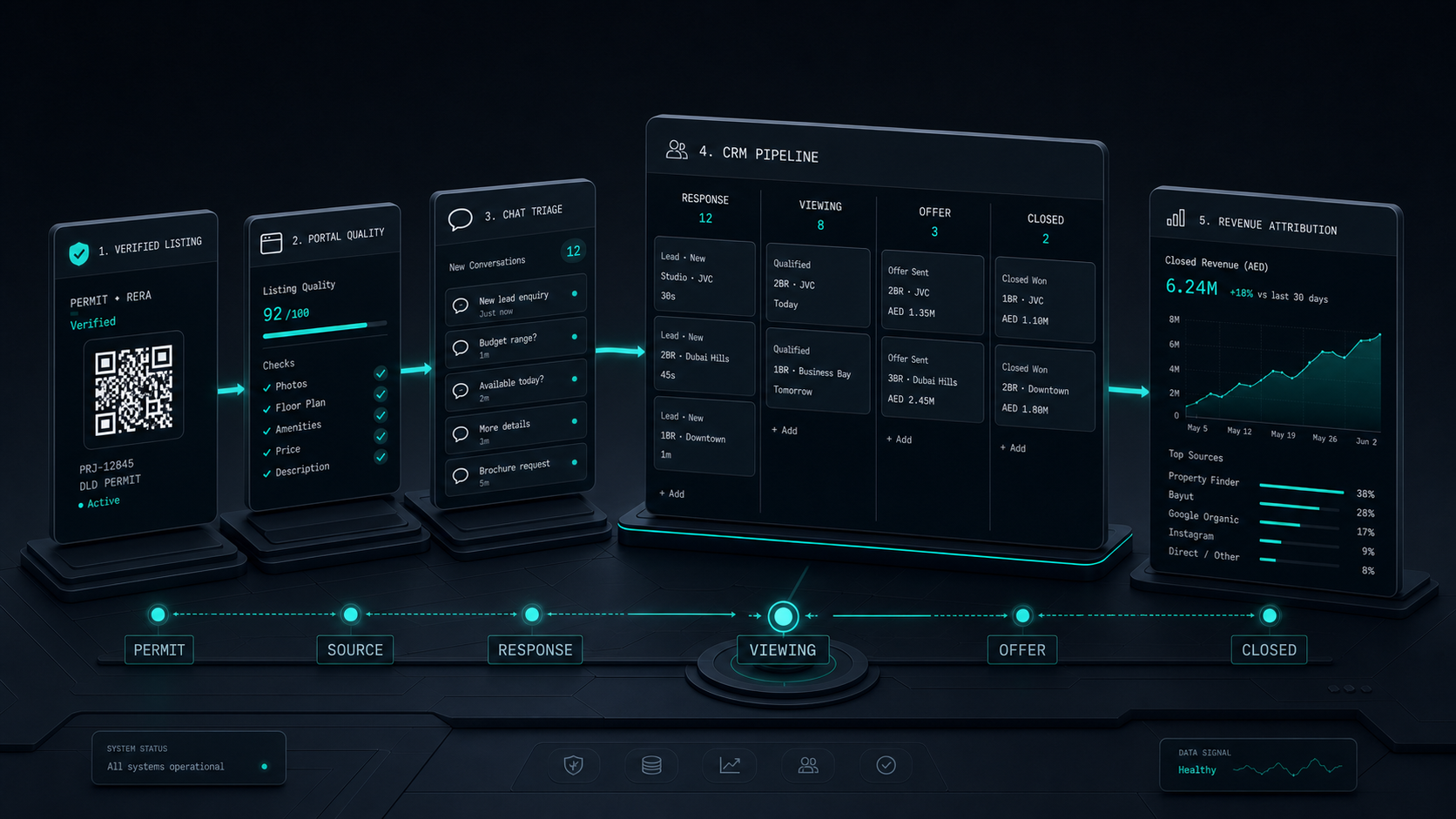
That separation matters in a Dubai brokerage. A buyer asking about a family apartment in Dubai Marina needs a fast answer, but the answer must come from current approved inventory. The conversation also needs a named broker, a next action, and a record in the CRM. A fluent reply that leaves those controls behind is just a better-looking leak.
Meta says its agent can gather customer information, answer questions, share product information, support multiple languages, control its audience, and escalate complex topics to a human. Those are useful capabilities. The official WhatsApp product page also tells businesses to test responses and refine the knowledge supplied to the agent.
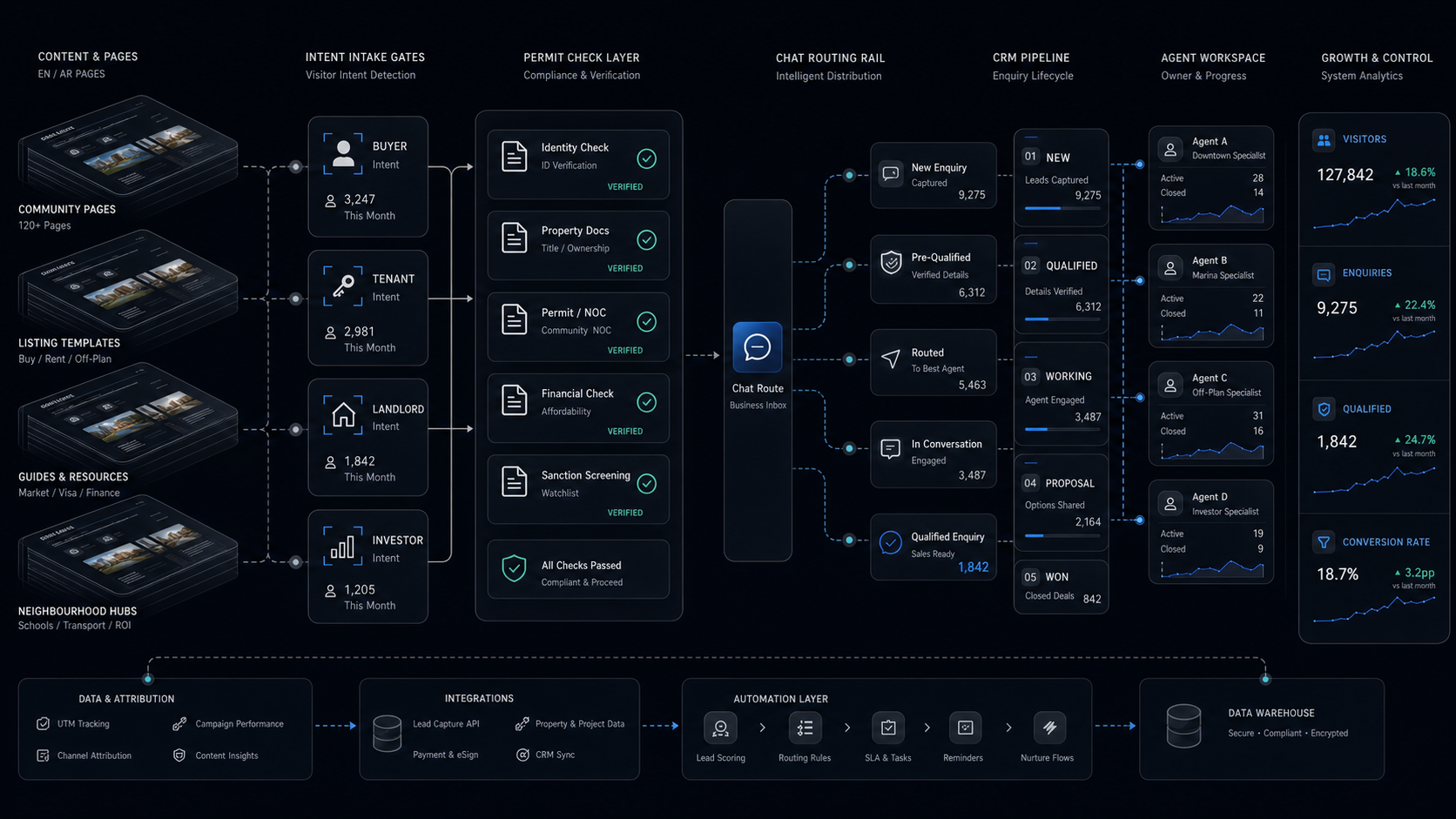
Our operating rule is blunt: the agent can talk, but the CRM must own. Keep assignment, stage, consent evidence, next action, and source attribution in the system of record. If that foundation is weak, use the Dubai brokerage CRM buying rule before adding another conversation layer.
What changes on 1 August 2026
The immediate change is simple: Meta Business Agent replies become token-metered. Meta's official pricing documentation sets one global rate of $2.00 USD per 1 million tokens, covering both AI processing and delivery for that message category.
A token is a small unit of text processed by the model. Your bill therefore depends on the user's message, the business context supplied to the agent, and the answer it generates. Long property descriptions, repeated qualification turns, and large knowledge inserts can consume more than a short opening-hours answer.
Meta estimates that one Meta Business Agent message typically consumes 20,000 to 25,000 tokens, or about $0.04 to $0.05 USD. Its own simple-inquiry example uses four delivered messages, about 80,000 tokens, and an estimated $0.16 to $0.20 USD. Its complex example uses ten delivered messages, about 250,000 tokens, and an estimated $0.40 to $0.50 USD.
Those are Meta examples, not a Dubai property benchmark. A brokerage should replay its own Arabic and English enquiries before setting a budget.

The existing 72-hour free entry-point window remains free for message delivery from Click-to-WhatsApp ads and Facebook call-to-action buttons, but Meta Business Agent token usage is still charged from 1 August 2026. Meta also says one charge category applies per delivered message, so a non-template reply is charged as either a Meta Business Agent message or a service message, not both.
One implementation gap remains open: Meta's current documentation says analytics and webhook details for the new message category are forthcoming and will be published before charging starts. A webhook is the automated event your systems receive when a message is delivered or billed. Do not promise finance a finished cost dashboard until those fields are available and tested in your own account.
UAE availability is still account-specific
Do not plan a brokerage-wide launch on the assumption that every UAE WhatsApp account can activate the feature today. Meta's June announcement describes a global expansion, but it also says the rollout starts with a select number of businesses. The current WhatsApp product page is more specific: availability is limited to eligible businesses in select markets, with additional markets launching soon.
That is not a contradiction to paper over. It means access is controlled at account level during rollout.
Check the registered WhatsApp Business number. If Tools > Meta Business Agent appears, follow the official authentication and linking flow, add only the approved knowledge set, and test before activation. If it does not appear, use Meta's waitlist and continue designing the source, handoff, data, and measurement controls. Those controls remain useful whether the final reply layer is Meta's agent or an owned build.
Some features may not be available to every eligible business. Scope against what the account can do now, not a launch announcement or a vendor demo.
Put a gate at every brokerage handoff
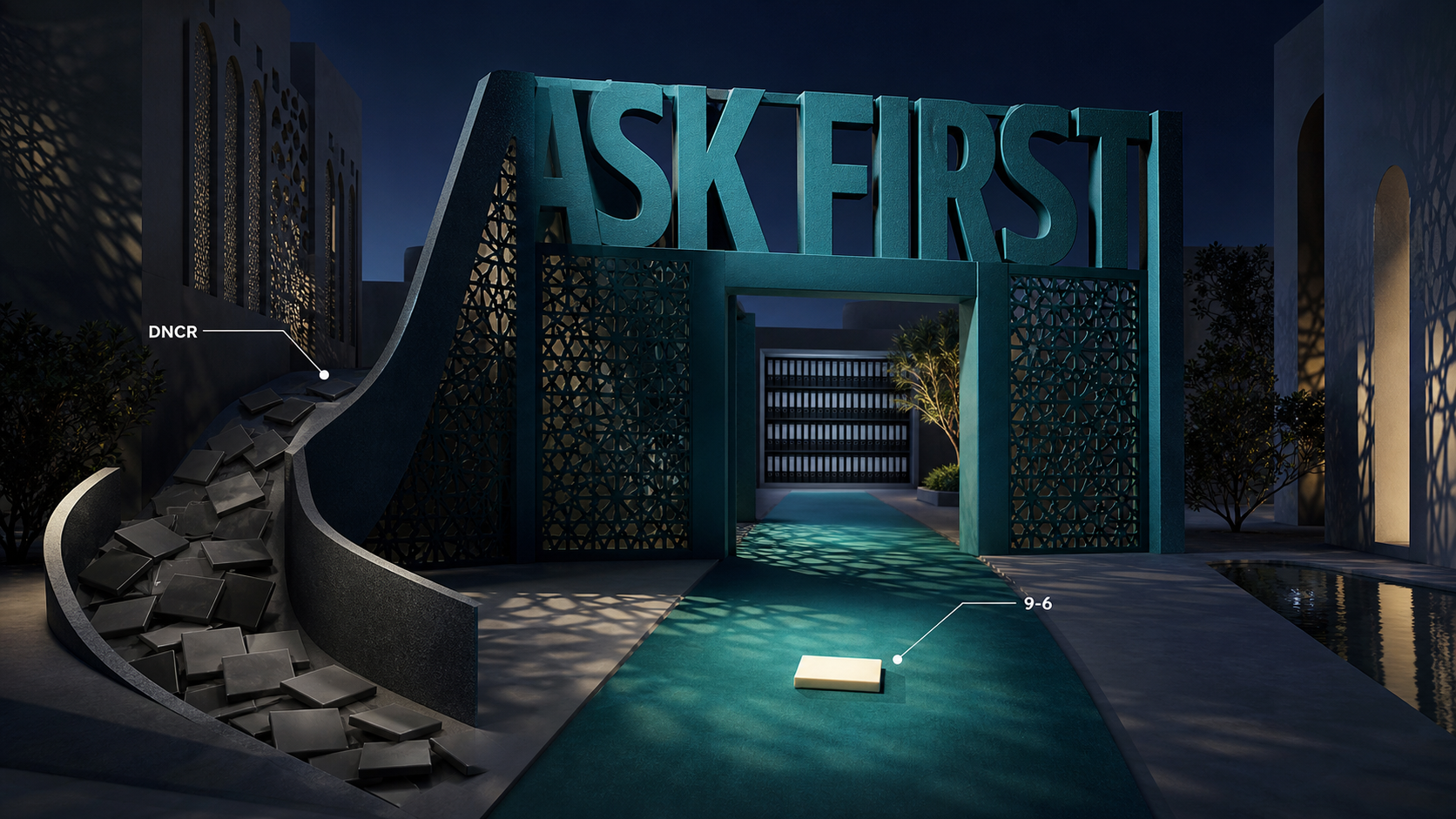
The safest pilot is narrow: qualify intent, answer from approved material, and hand a complete record to a person. Every transition should fail closed when the source data is missing, stale, sensitive, or ambiguous.
Gate the property source
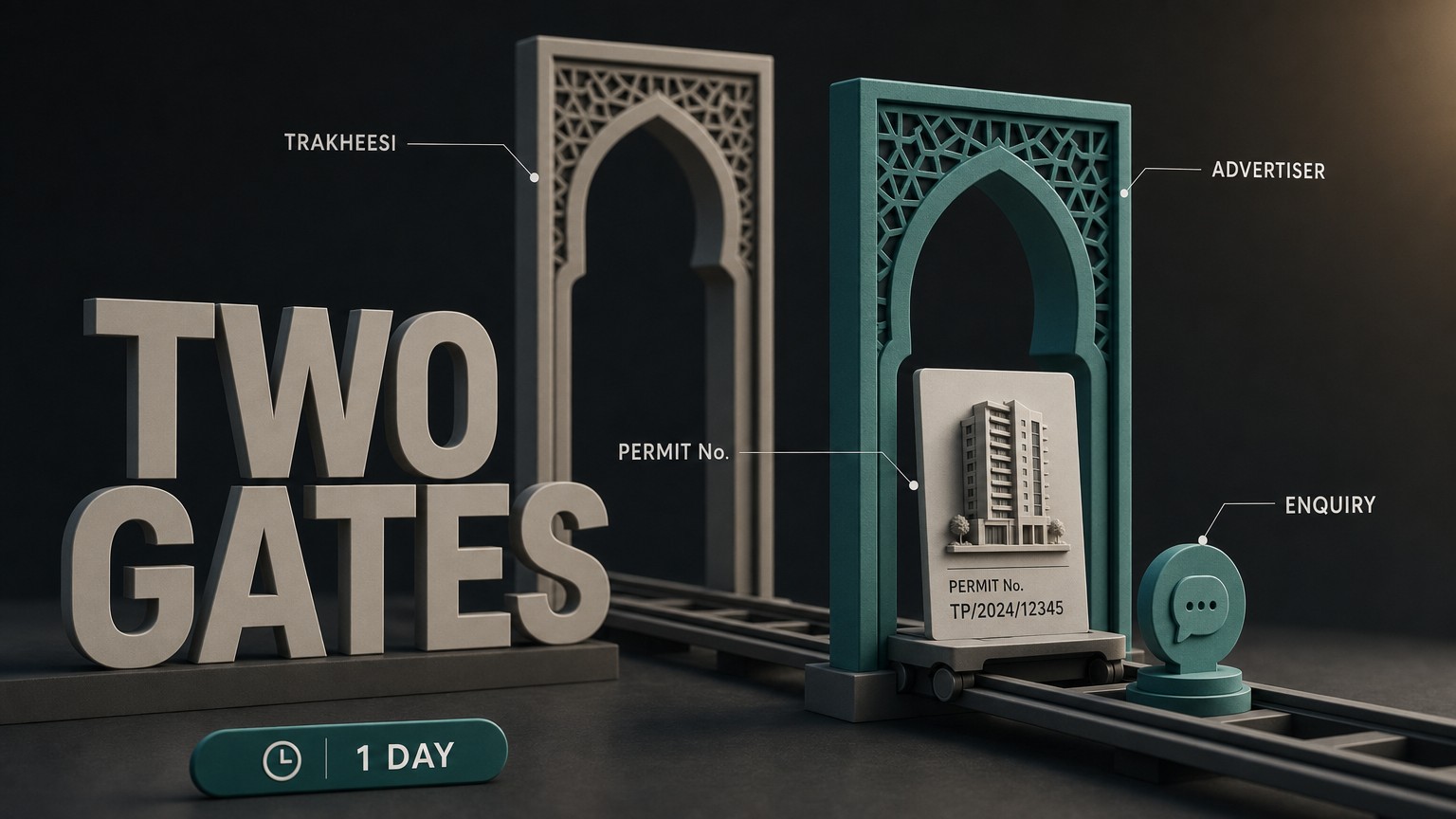
Allow the agent to answer only from an approved inventory record containing the current property status, permitted public description, price field, responsible broker, and verification link. Dubai Land Department says Madmoun, the QR record issued through Trakheesi for a real-estate advertisement permit, lets customers verify authorised property and company details.
If a buyer asks for a unit whose approved record is absent or stale, the agent should say a broker will confirm availability. It should not infer a price from a similar listing or promise that a unit is still available. The Madmoun QR publishing gate is the right source-control pattern for reusable property claims.
Replay Arabic and English enquiries
Test the language people actually use: English, Modern Standard Arabic, Gulf phrasing, transliterated Arabic, mixed-language messages, voice-note summaries, developer nicknames, community abbreviations, and budget shorthand.
Use redacted real examples, then check the extracted fields rather than admiring the prose. For a Dubai Marina buyer, the output should preserve location, bedrooms, budget, purpose, financing status, move date, and preferred viewing window. When meaning is uncertain, the correct response is a clarifying question or human escalation, not a confident guess.
Define the human trigger
Write explicit transfer rules for price negotiation, legal or financing advice, complaints, vulnerable customers, missing permit data, contradictory inventory, data-rights requests, and any request to pay or reserve.
The handoff must include the conversation summary, source campaign, property reference, collected preferences, unanswered question, and the reason for escalation. A generic notification that says "hot lead" makes the broker reread the whole chat and destroys the time saved.
Make the CRM accept or reject the record
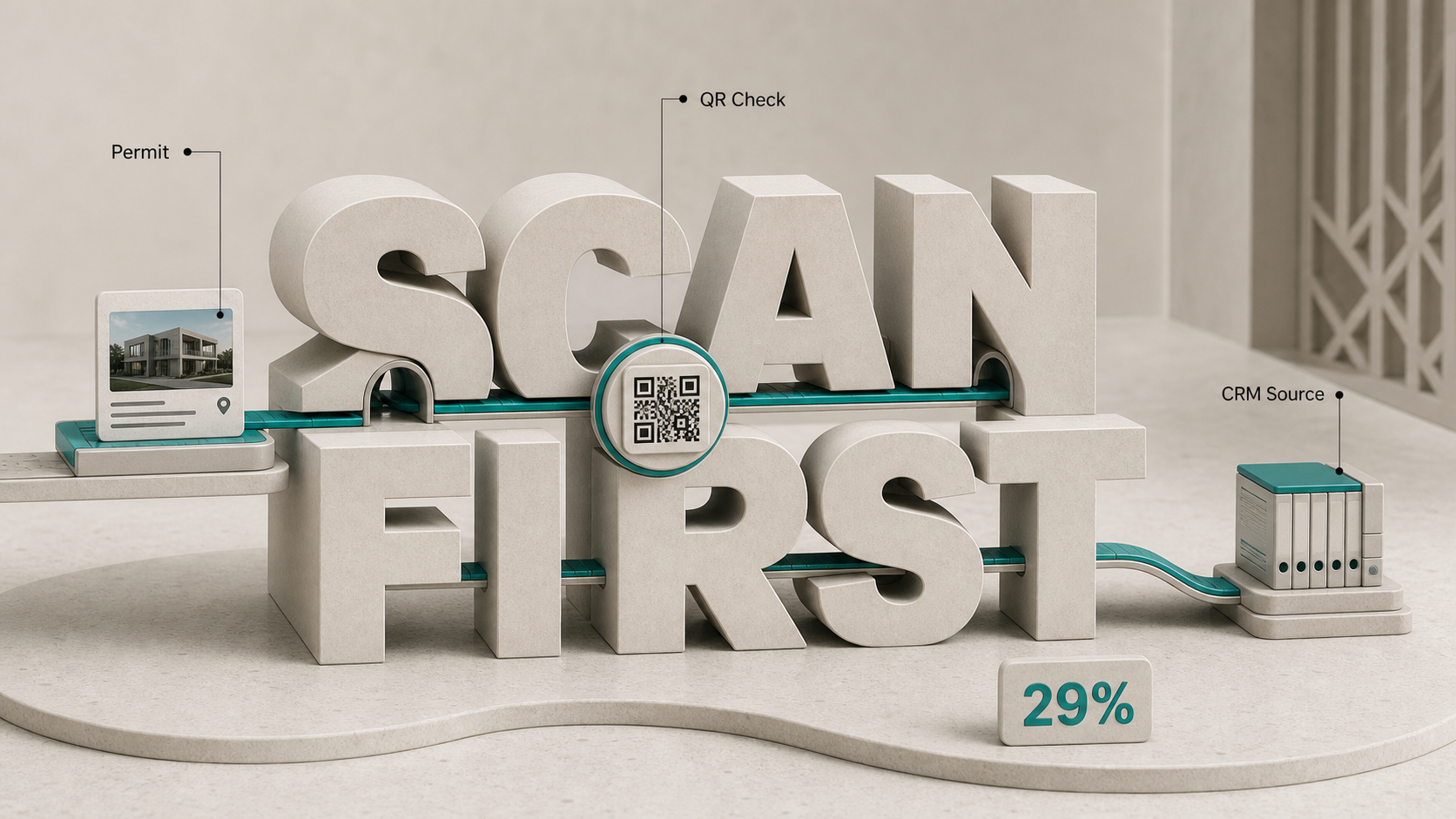
Create or update one lead record, assign one accountable owner, preserve the original source, and set the next action. Duplicate matching should use the brokerage's agreed identifiers rather than creating a new contact every time someone returns through another ad.
If the CRM write fails, the agent should not tell the customer that a viewing is booked. It should route the conversation to the shared human queue and expose the failed action for recovery.

Put the data gate before past-chat learning
Past chats are not a free knowledge base. They contain names, phone numbers, budgets, family circumstances, financing details, complaints, and informal statements that were never written for reuse by an AI system.
The UAE government's Personal Data Protection Law summary says the law covers electronic processing inside or outside the country, sets consent and other permitted-processing conditions, gives people rights to correct data and restrict or stop processing, and governs cross-border transfers.
For a brokerage pilot, map the data before connecting chat history:
- what fields the agent reads;
- why each field is needed for the enquiry;
- where the source and generated summary are stored;
- who can see and correct them;
- how a person can request restriction or stoppage;
- which vendors and countries receive the data.
Then reduce the knowledge set. Approved website pages, controlled FAQs, and current listing records are safer starting material than raw conversations. Use redacted chat excerpts only when they are necessary for language testing, and keep the test environment separate from live customer replies.
This is an operating control, not a claim that one configuration automatically satisfies every legal obligation. Your legal and data-protection owners should approve the processing design that applies to the brokerage.
Measure cost per qualified handoff, not cost per reply
The cheapest automated answer can still be expensive if it routes the wrong property, loses attribution, or leaves a buyer waiting for a broker who never owned the lead. The useful denominator is the qualified, attributable handoff that reaches the right person with enough context to act.
Log these events together:
- enquiry source and campaign;
- property or project reference;
- language detected and whether clarification was needed;
- qualification fields completed;
- human-transfer reason and owner;
- CRM write result;
- viewing outcome;
- Meta message category, token use, and charge when available.
Review failures by cause. If the agent is accurate but the shared queue is ignored, fix assignment. If Arabic messages escalate too often, improve the approved examples and test set. If token cost rises because every answer receives an oversized inventory context, narrow retrieval. If viewing promises fail because inventory is stale, stop automation at the source gate.
The buy decision becomes straightforward: proceed only when the agent improves response coverage without weakening approved property data, human accountability, privacy, or attribution. Token pricing is easy to calculate. Operational trust is the real threshold.
Questions Dubai brokerages are asking
How much does Meta Business Agent cost on WhatsApp?
From 1 August 2026, Meta's published global rate is $2.00 USD per 1 million tokens for Meta Business Agent messages. Meta estimates a typical message at 20,000 to 25,000 tokens, but your cost will vary with the prompt, business context, and response complexity.
Is Meta Business Agent available in the UAE?
Do not assume blanket UAE availability. Meta describes a global expansion, while the current WhatsApp product page says eligible businesses in select markets and notes that additional markets are coming. Check the Tools menu for the registered business number or join the waitlist.
What can Meta Business Agent do for a brokerage?
Meta lists information gathering, question answering, recommendations, multi-language support, audience controls, and human handoff. For a Dubai brokerage, the sensible first scope is FAQ response and lead qualification from approved sources, followed by a controlled CRM handoff.
Does Meta Business Agent replace the WhatsApp Business Platform or the CRM?
No. Meta says its Agent Platform works alongside the WhatsApp Business Platform. The brokerage still needs a CRM and operating workflow to own assignment, status, source attribution, data evidence, and the next human action.
Book the Readiness Sprint
Map the source data, EN/AR tests, handoff controls, CRM actions, privacy evidence, and measurement plan before a live brokerage rollout.
Jul 21, 2026