Madmoun QR Code for Dubai Real Estate Ads: The Broker Publishing Gate
A Dubai brokerage workflow for Madmoun QR checks, Trakheesi permit numbers, portals, WhatsApp routing, and CRM attribution before ads go live.

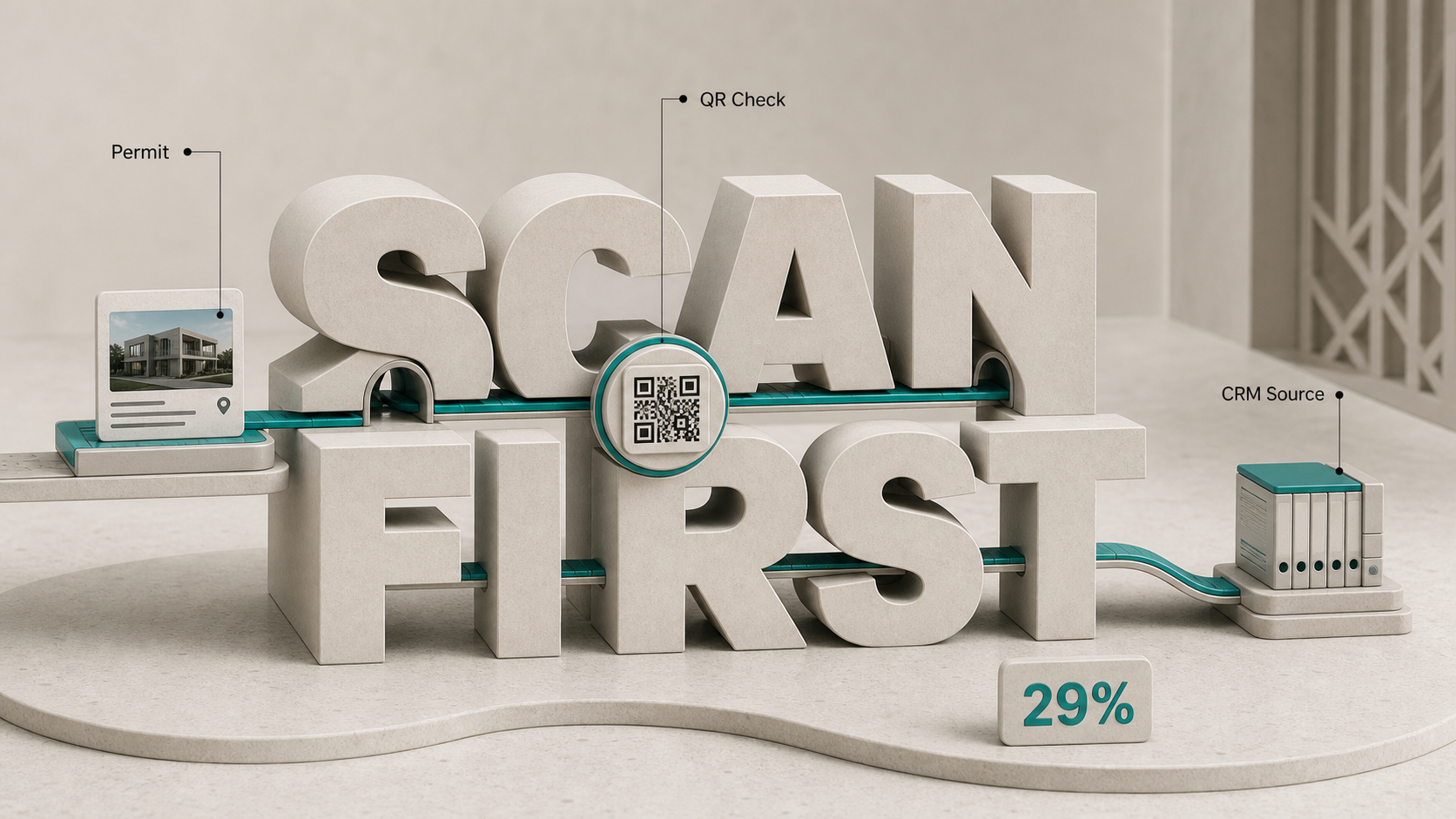
Treat Madmoun as a publishing gate, not a QR-code afterthought. A Dubai brokerage should not let a listing go live until the Trakheesi permit number, Madmoun QR code, advert copy, property data, and CRM source are checked against one record.
The verdict: the QR code is the final pre-publish check
Madmoun belongs at the last approval point before a Dubai property advert goes live. The QR code is not decoration for the artwork; it is the visible proof that the advert has a real estate advertising permit behind it, and the internal cue that the listing, portal record, social post, website page, WhatsApp route, and CRM source should all match.
Dubai Land Department's Madmoun announcement defines Madmoun as an electronic service accessible through Trakheesi and represented by a QR Code issued for any real estate advertisement permit. DLD said Madmoun would become a requirement as of 24 April 2023, and that all real estate companies were expected to feature the QR code on print and audiovisual advertisements.
The stricter operating reality is visible in DLD's later governance update. DLD said on 24 April 2025 that all real estate companies are required to display the QR code on all real estate advertisements, whether visual or written. The same update said DLD's AI-powered Real Estate Advertising Governance Platform had monitored over 279,000 real estate advertisements across Property Finder, Dubizzle, and Bayut since launch, and that 29% of the monitored listings were automatically modified using artificial intelligence.
That changes how a brokerage should manage publishing. A listing manager should not ask, "Does the design have a QR code?" The useful question is: "When scanned, does this code confirm the same property, company, advert, and permit status as the ad we are about to publish?"
What must match before the advert goes live
The advert should pass a single match test: the DLD permit record, QR scan result, portal listing, website page, and CRM source must describe the same property and the same advertising company. If one of those records is different, the advert is not ready.
DLD's Real Estate Ad Permit service covers 14 categories: newspaper advertisements, SMS advertisements, outdoor advertisements, vehicle advertisements, printed advertisements, electronic advertisements, billboard advertisements, promotional campaigns, open house events, classified advertisements, organizing real estate exhibitions, project launch events, real estate promotion platforms, and real estate seminars. For a brokerage, the key phrase is electronic advertisements: the website listing, portal listing, campaign creative, and social post should be treated as governed publishing surfaces, not casual content.
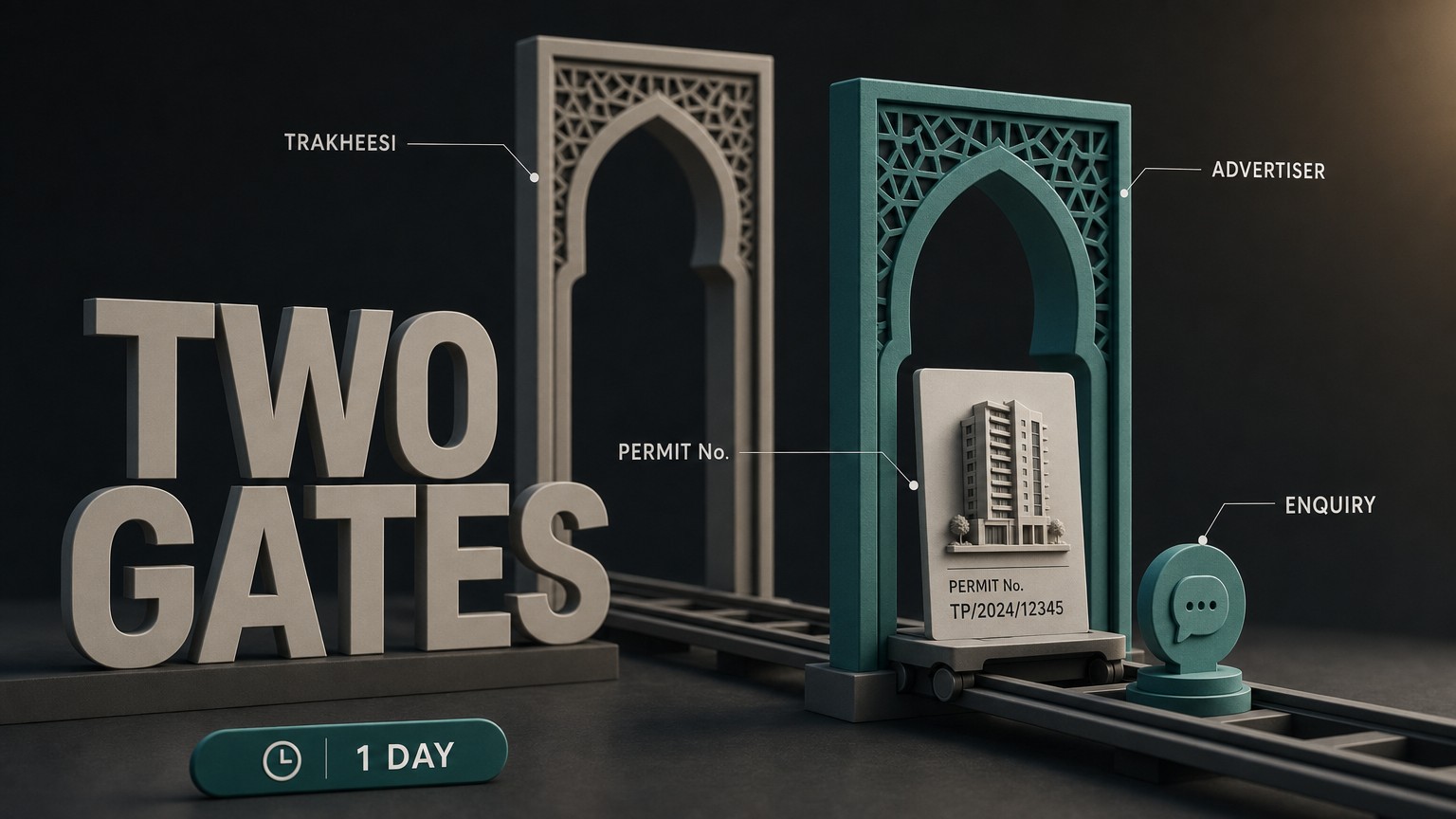
DLD's permit service flow is straightforward: login to Tarakhesi System and select the desired service, fill in the required information and upload documents, employee review and approval, payment, then receipt of the e-permit certificate. DLD lists the Real Estate Ad Permit service time as 1 Working Day. DLD lists service fees as Project Launch Event Permit: AED 5,000, Other Permits: AED 1,000, and AED 20 Knowledge and Innovation Fee.
For brokers, the document check matters as much as the fee. DLD says if the applicant is a real estate broker, a marketing contract copy with the property owner is required for listed permit types including online advertisements, classified ad permits, open house events, billboard advertisements, promotional campaigns, and other listed advertising permit types.
DLD's older enforcement language is blunt. DLD said in 2020 that advertising-requirement fines are progressive and start from AED 50,000, and that violations included no advertising permits, manipulation of advertising permit numbers, and use of expired permits. The same DLD release said the advertiser bears legal consequences if the permit number is not placed in the advertisement.
The practical lesson is simple: permit hygiene is not admin. It protects the brokerage licence, the brand, and the quality of enquiries.

Build the publishing gate inside the brokerage
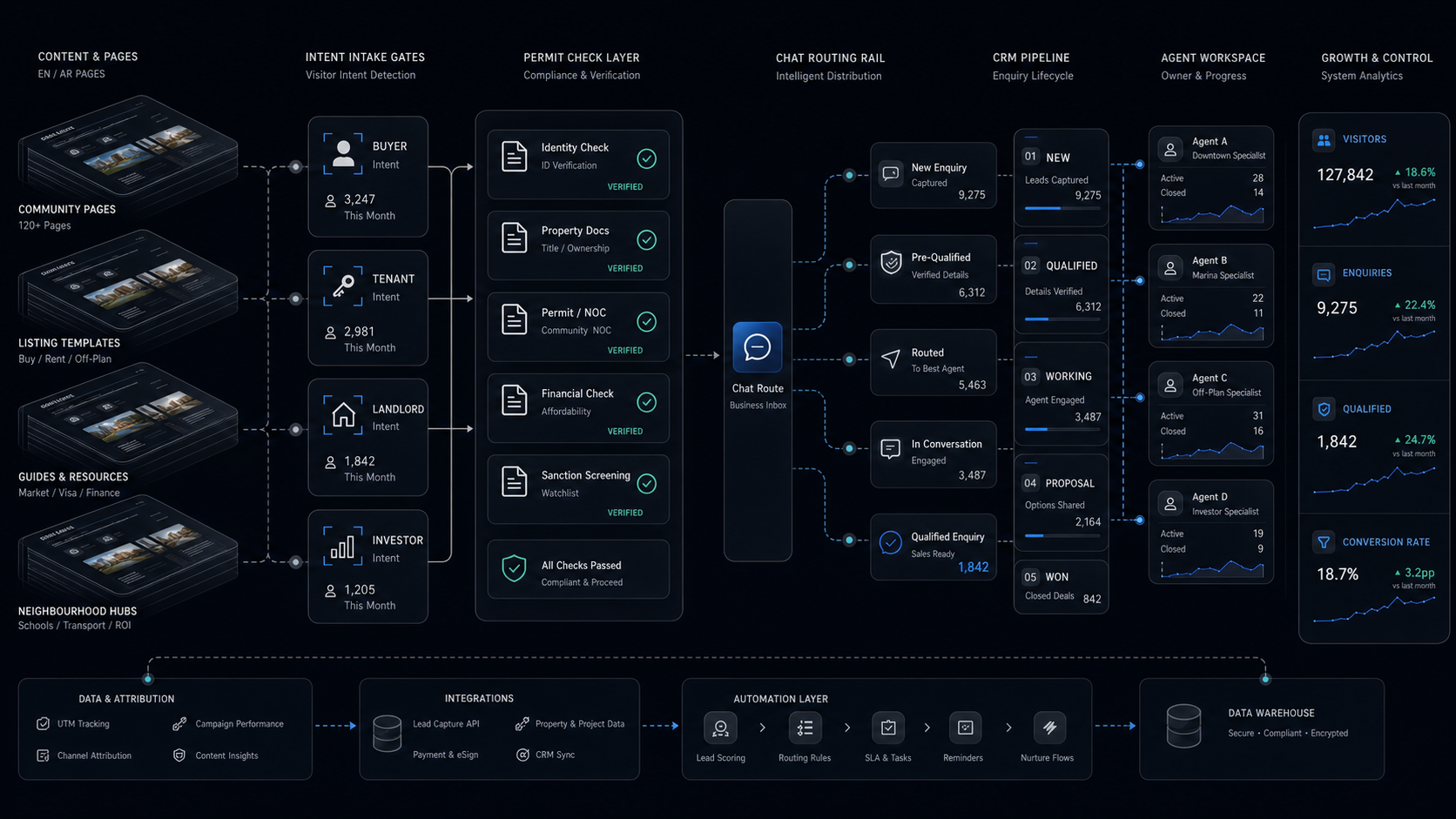
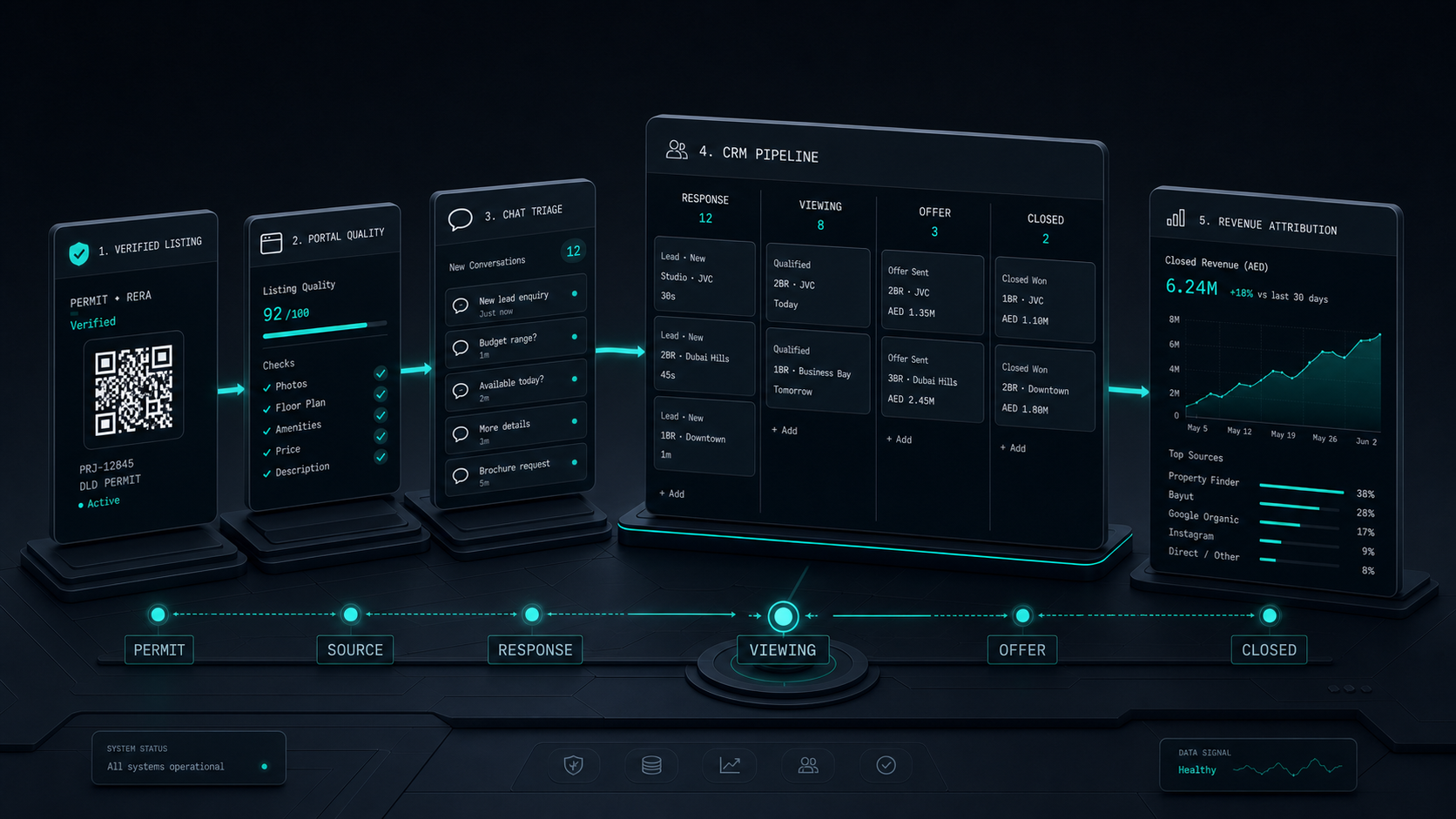
A brokerage should make one person accountable for the listing gate, but the gate itself should live in the operating system, not in one person's memory. The minimum setup is a shared listing record with required fields, a scan check, a portal status, and a CRM source created before the advert goes live.
Create the listing record before the advert
Create the internal record with the property reference, owner permission status, advert type, intended channels, language versions, broker owner, and CRM source. This is where the English and Arabic advert copy should be approved together, so the Arabic version is not a late translation that drifts from the permitted details.
Prepare the owner document and advert format
Bayut's Trakheesi workflow says a broker needs an advertising format and a marketing contract from the owner, either Form A from DLD or an NOC from the legal owner. Treat that as the content team's start signal: no owner document, no final creative, no portal upload, no paid push.
Apply through Trakheesi and save the permit
Use the Trakheesi permit record as the source of truth. Save the permit number, issue status, advert type, and permitted property details in the same internal record that the content, portal, and sales teams can see.
Scan the Madmoun QR code before publishing
Scan the QR code on the final creative and compare it with the advert about to go live. DLD says the QR code lets customers verify authenticity and validity, confirm RERA approval, and view advertisement information including advertising company details, property condition, and property specifications.
Publish only after the CRM source exists
Create the source in the CRM before the listing goes live: portal, website, Instagram, Google, campaign name, permit number, listing owner, broker owner, and next action. When the first WhatsApp enquiry arrives, the team should already know which listing created it and who owns the follow-up.
This is where most brokerages leak value. The permit is handled by admin, the portal listing by operations, the advert by marketing, the WhatsApp reply by the broker, and the CRM entry later, if it happens at all. That split creates two bad outcomes: a compliance risk if the advert changes after the permit, and a growth risk if the enquiry source cannot be trusted.
For a brokerage already improving its brokerage lead-generation system, the Madmoun gate should sit before every paid and organic push. If the listing is not permitted and traceable, it should not be promoted.
Connect the compliance gate to WhatsApp and CRM
The same record that proves the advert is compliant should also prove which marketing work produced the enquiry. A valid QR code protects trust; a connected CRM record protects learning.
Scope the CRM fields like this:
The important move is to create the CRM source before the advert goes live. If a broker receives a WhatsApp message from a portal listing, the source should not be typed manually from memory. If a website enquiry comes from an owned listing page, the page should already connect to the same property and permit record. If the same property is promoted on Instagram, the campaign label should point back to the same listing record.
This is also where an owned brokerage website becomes more than a brochure. The website can host the clean property page, preserve the compliant description, route WhatsApp with source context, and keep a record when portal demand becomes owned demand.
What to do when the scan does not match the ad
Stop the advert when the QR scan does not match the public ad. Do not patch the design, hide the code, or let the campaign run while someone "checks it later."
DLD said on 26 December 2023 that 411,608 real estate advertising permits had been issued with a QR code since Madmoun launched in April 2023. In the same update, DLD said only five violations were recorded for the Madmoun QR code commitment and that each violation amounted to AED 50,000. DLD also said it intended to enforce violations directly on companies failing to adhere to real estate advertising conditions without issuing prior warnings after a grace period.
The inspection logic is useful for your own QA. DLD said ongoing inspection campaigns verify continued compliance with QR-code use by checking code presence, data alignment with the code, permit validity, and whether the permit was issued to the same advertising company.
Use that as the brokerage's own exception workflow:
- If the QR code is missing, do not publish.
- If the QR code scans but the company does not match, remove the advert from the queue.
- If the property condition, specification, or price framing does not match the advert, update the permit path or correct the advert before publishing.
- If the permit is expired, treat the listing as unavailable for promotion until the permit is valid.
- If the CRM source is missing, hold the advert even if the permit is valid, because the brokerage will not be able to attribute the enquiry.
Property portals create another checkpoint. Bayut says to have a property listing live on Bayut or dubizzle, the broker needs a Trakheesi permit number. Property Finder says brokers add the Trakheesi number to a listing and that Property Finder verifies the Trakheesi number before the broker can move forward. For Primary Unit permits, Property Finder says the broker should get a developer NOC for the specific units, apply through DLD, create the ad and include the QR code, and Property Finder reviews the permit during listing insertion before the listing goes online.
Portal review is useful, but it should not be the first time the brokerage catches a mismatch. The internal gate should catch it earlier.
The brokerage checklist
Use this checklist before any property advert goes live on a portal, the brokerage website, Instagram, Google, WhatsApp broadcast, printed collateral, or a sales deck.
The checklist should be boring. That is the point. A brokerage does not need a clever workaround for permit handling; it needs a repeatable publishing gate that a listing coordinator, marketing lead, and sales manager can all trust.
What is the QR code for real estate in Dubai?
It is the Madmoun QR code issued through Trakheesi for a real estate advertisement permit. DLD says the code lets customers verify the advert's authenticity and validity and view approved advertisement information on the DLD website.
How do you get a Madmoun QR code?
Apply for the relevant real estate advertisement permit through Trakheesi. DLD describes Madmoun as the QR-code layer accessible through Trakheesi and issued for any real estate advertisement permit.
How do you get an advertising permit in Dubai?
DLD's permit flow is to log in to Tarakhesi System, select the desired service, fill in the required information and upload documents, wait for employee review and approval, pay, and receive the e-permit certificate.
How do you verify a real estate permit in Dubai?
DLD's Verify License and Permits service allows customers to verify e-copies of licenses and permits issued by DLD via Trakheesi. DLD lists the service time as immediate and the channels as the DLD website and Dubai REST App.
Do Bayut, dubizzle, and Property Finder check Trakheesi permit numbers?
Bayut says a Trakheesi permit number is needed for a listing to go live on Bayut or dubizzle. Property Finder says it verifies the Trakheesi number before the broker can move forward.
Book the Growth Sprint
Map your Dubai brokerage's listing, Madmoun, portal, WhatsApp, and CRM workflow into a cleaner growth system.
Jul 8, 2026