AI Automation Services in the UAE: What to Scope First
A UAE-focused guide to AI automation services: what to scope first, how to compare providers, and which controls keep workflows auditable.

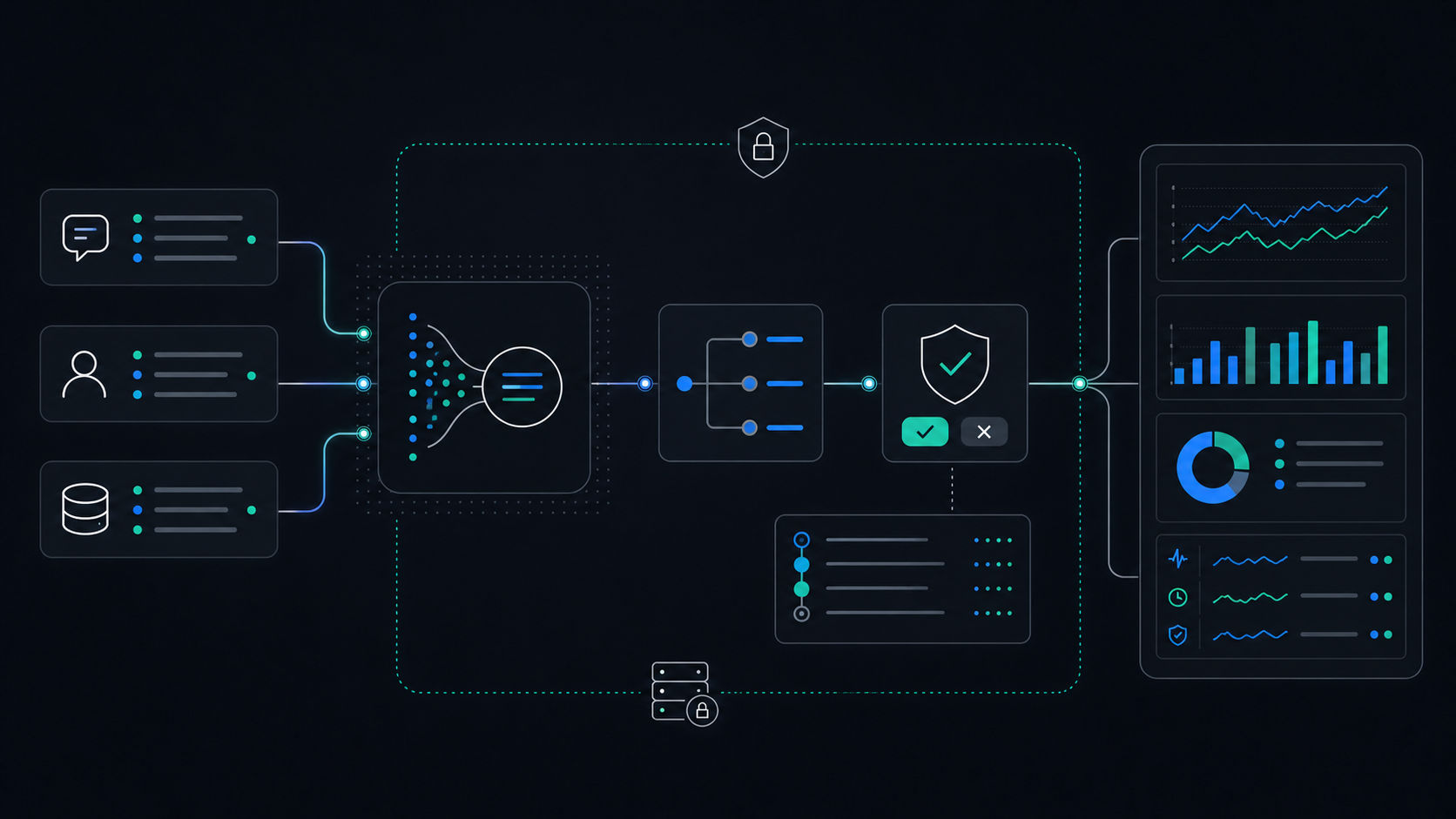
Buy AI automation services in the UAE only after the workflow is scoped as a controlled system: trigger, data source, approval point, audit log, and fallback owner. The provider choice matters less than whether the first workflow can survive PDPL questions, Arabic-English exceptions, WhatsApp reality, and a board asking who approved what.
The Verdict: Scope The Workflow Before The Provider
The best first AI automation service is the one that turns one messy workflow into a logged, reviewable, owned operating system. A proposal that starts with model choice, bot count, or vague productivity claims is starting in the wrong place. For a UAE company, the real scope starts with five questions:
- What event triggers the workflow?
- Which source system is trusted?
- What can AI draft, classify, extract, or route?
- Where does a named person approve the output?
- What gets logged for review, audit, and handover?
That is why the first project should not be "add AI to the business." It should be closer to "route WhatsApp property leads into CRM with duplicate checks, Arabic-English summary, sales-owner assignment, and manager approval before price-sensitive replies." The second version can add more automation. The first version has to prove the control model.
For most UAE operators, start with work that prepares a decision rather than owns it. Intake, routing, summarisation, field extraction, duplicate detection, quote preparation, document triage, and exception alerts are strong first candidates. Final pricing, medical advice, employment decisions, fund allocations, supplier awards, and contractual commitments should stay with a human owner until the system has clean data, clear logs, and a tested exception path.
The Service Route Comparison
Choose the route by risk and ownership, not by which option sounds most advanced. A simple no-code setup can be the right answer for a low-risk admin task. A governed custom workflow is the better answer when the process touches customer data, money, regulated records, or public-facing messages.
The route can change over time. A Dubai brokerage might begin with a no-code intake workflow, then move to a custom vertical system once lead volume, duplicate records, Arabic-English messages, and agent handoffs become the real bottleneck. A finance or procurement team might skip lightweight tools and go straight to a workflow queue with approvals because the audit trail matters from day one. If procurement is the first automation target, the same control rule applies to procurement AI agents in the UAE: let AI prepare the decision, not own the award.
Start Where AI Prepares Decisions, Not Owns Them
The safest first workflow is high-volume, repetitive, measurable, and reversible. It should save time without giving AI the final authority over a customer, patient, employee, investor, or supplier.
For a real-estate brokerage, start with WhatsApp and portal leads. AI can classify buyer versus tenant, extract budget and location, detect duplicate contacts, summarise the request in English, preserve the original Arabic message, and assign the lead to the right agent. The agent still approves the response when it includes pricing, availability, payment terms, or negotiation.
For a clinic admin team, start with intake and scheduling support, not diagnosis. AI can read a submitted form, flag missing insurance details, suggest an appointment category, and prepare a staff note. It should not give medical advice, change clinical priority, or message a patient about treatment without staff review.
For a family office or fund operations team, start with document triage and task routing. AI can classify statements, agreements, invoices, and KYC packs, then create a review queue. It should not approve a transfer, assess suitability, or change an investor record without a named approver.
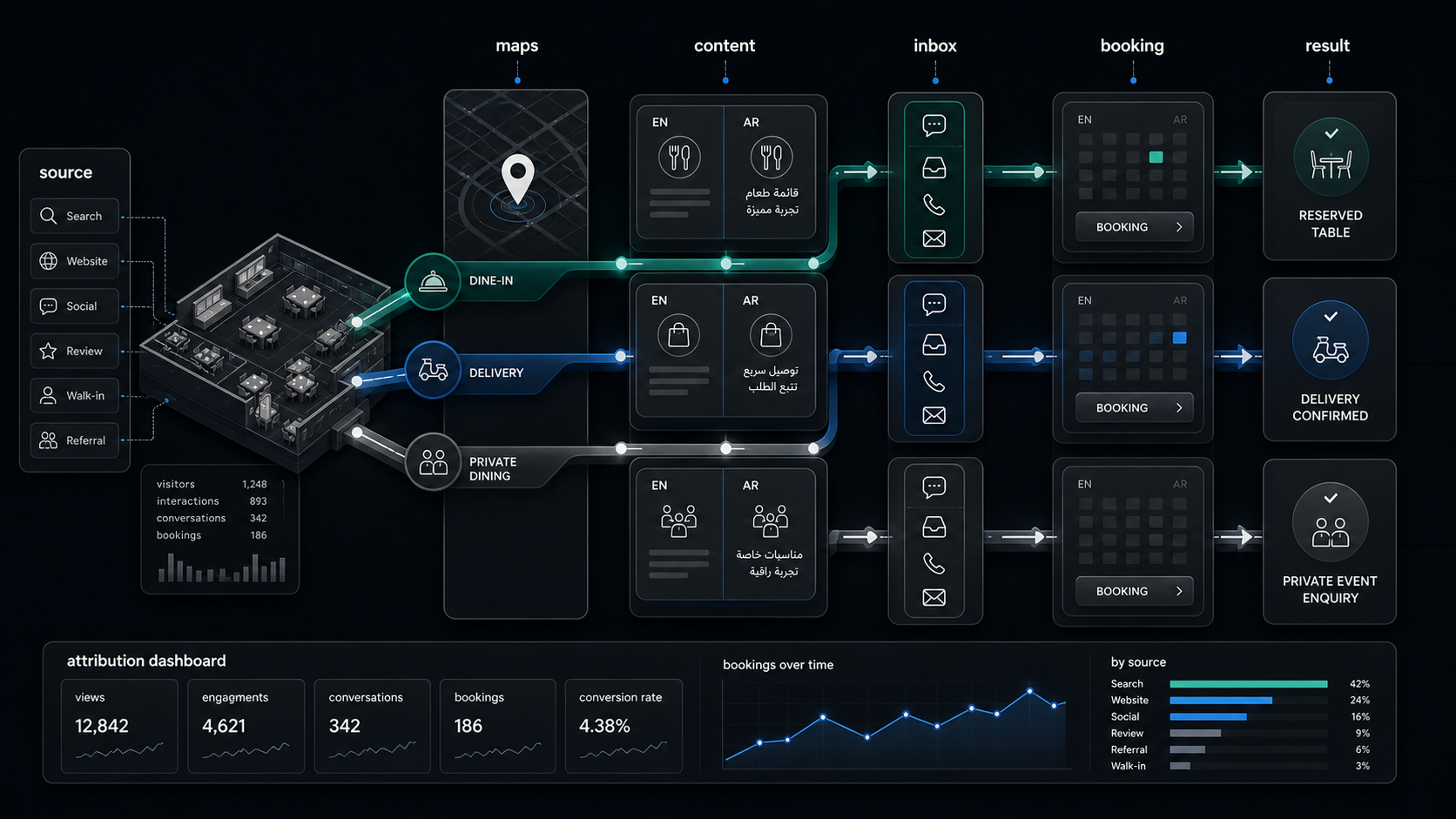
For a hospitality, logistics, or services company, start with status queries and internal follow-up. AI can draft responses, check booking or shipment state, and alert the responsible team when a case breaches SLA. It should not promise compensation, refunds, or contractual exceptions without review.
The pattern is the same: AI reads, drafts, extracts, routes, and explains. A person approves the action that creates legal, financial, medical, reputational, or customer-impacting risk.
The UAE Governance Layer
The governance layer is not paperwork after the build. It is the build. A UAE workflow automation service should define data handling, approval rules, logs, access, and fallback before the first integration goes live.
PDPL, the UAE Personal Data Protection Law, is the national personal-data framework under Federal Decree Law No. 45 of 2021. The official UAE portal describes it as an integrated framework to ensure information confidentiality and protect individual privacy. For AI automation, that means personal data cannot be treated as harmless prompt material. The provider should document what personal data enters the workflow, where it is processed, how long logs are kept, who can access them, and how records can be corrected or removed when needed.
Dubai AI Seal adds a useful buyer lens even when the provider is not applying for the Seal. The official Dubai AI Seal page says it is a Dubai Centre for Artificial Intelligence verification system for the AI industry, with six tiers and a serial number that organisations can verify on the Seal website. If a supplier claims Dubai AI credibility, ask for the exact entity, activity, tier if applicable, and serial-number verification path. If they are not sealed, ask for the same underlying proof: legal entity, actual AI capability, governance controls, and evidence that the provider is not simply reselling a generic chatbot wrapper.
Data residency is a procurement question, not a slogan. UiPath announced on October 14, 2025 that its Automation Cloud had launched in the UAE on Microsoft Azure, describing the location as a way for organisations to position infrastructure, applications, and data while meeting local data-residency requirements. That does not mean every UAE workflow must use UiPath or that all data must stay in-country in every case. It does mean serious providers should be able to answer the processing-location question clearly, especially for regulated sectors and board-sensitive workflows.
A governed AI automation scope should include these control points:
- Data map: each data field, source system, destination, processor, retention rule, and owner.
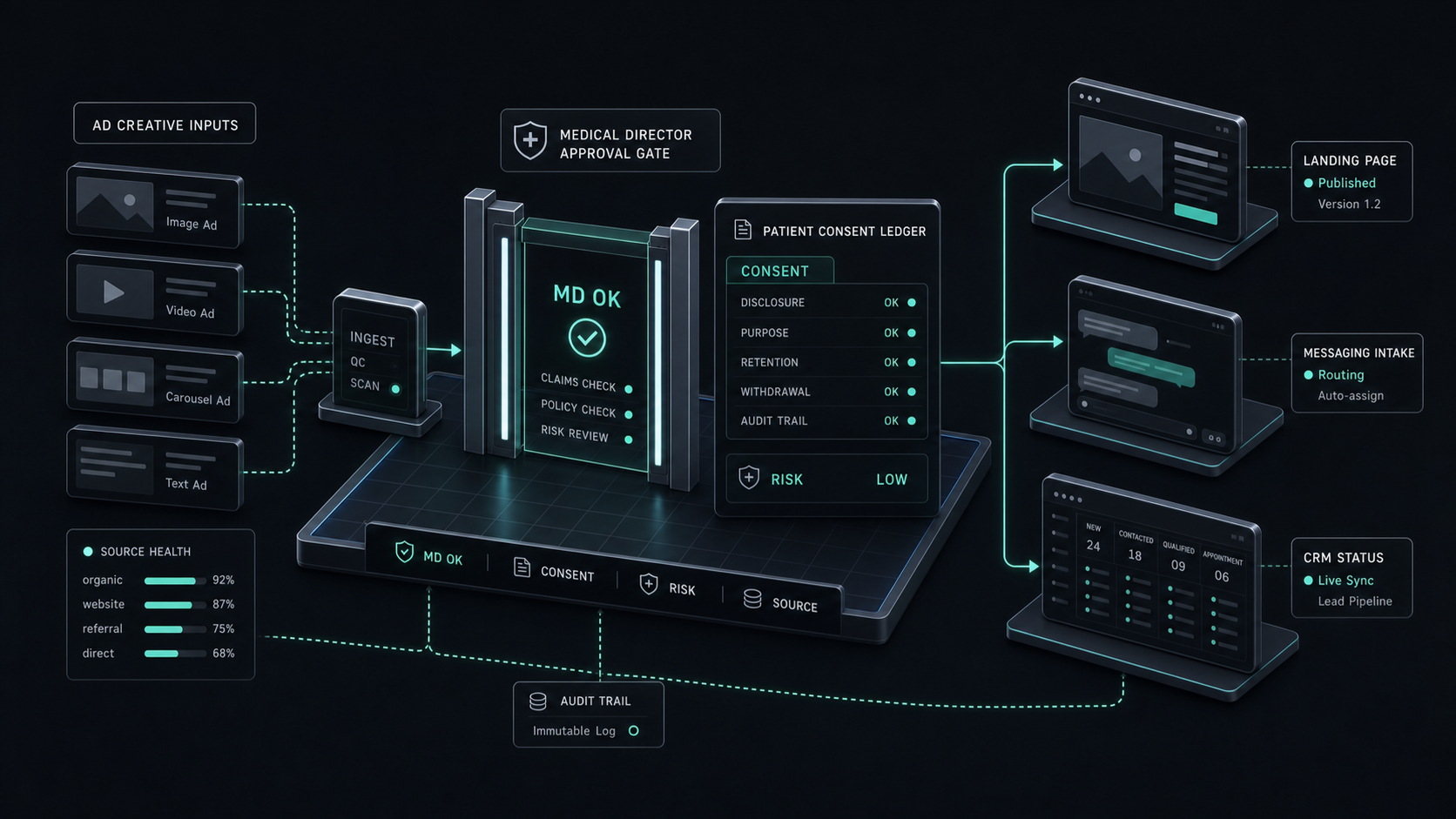
- Approval matrix: which actions AI can draft, which actions require human approval, and who approves.
- Audit events: trigger received, data read, AI output generated, confidence score, human edit, approval, send, failure, retry, and override.
- Access control: who can view prompts, logs, customer data, financial fields, and exported reports.
- Fallback path: what happens when the model is uncertain, the API fails, WhatsApp is unavailable, or the CRM rejects a record.
The board question is simple: if a customer complains, can you reconstruct what happened? If the answer is no, the workflow is not production-ready.
What To Ask Before Signing
The right proposal should read like an operating design, not a tool invoice. Before signing, ask the provider for six artifacts.
1. Workflow Map
Ask for a single-page map from trigger to final action. It should show systems, users, approval points, and exceptions. If the map needs ten pages, the first workflow is too large.
2. Data Map
Ask what data is collected, processed, stored, logged, and sent to third parties. For UAE customer workflows, separate personal data, sensitive operational data, and low-risk metadata.
3. Approval Matrix
Ask which steps AI may complete alone and which steps require a named human. Price changes, refunds, supplier decisions, clinical messages, investor actions, and contractual commitments should have explicit approval rules.
4. Exception Rules
Ask for the exact cases that stop automation. Low confidence, missing fields, duplicate customer records, mixed Arabic-English ambiguity, policy-sensitive messages, and finance terms should route to review.
5. Audit Event List
Ask for a sample log. You should see input received, output generated, confidence, human edit, approval, send event, error, retry, and override. A dashboard without event history is not enough.
6. Handover And Exit Plan
Ask how your team changes prompts, updates rules, exports logs, rotates credentials, and moves away from the provider if the relationship ends. Ownership matters more after launch than during the demo.
The fastest way to test a provider is to give them one real workflow and ask for this artifact set before discussing a full roadmap. Strong providers will narrow the scope. Weak providers will expand it because broad promises hide missing controls.
Reference Scope: WhatsApp To CRM Automation
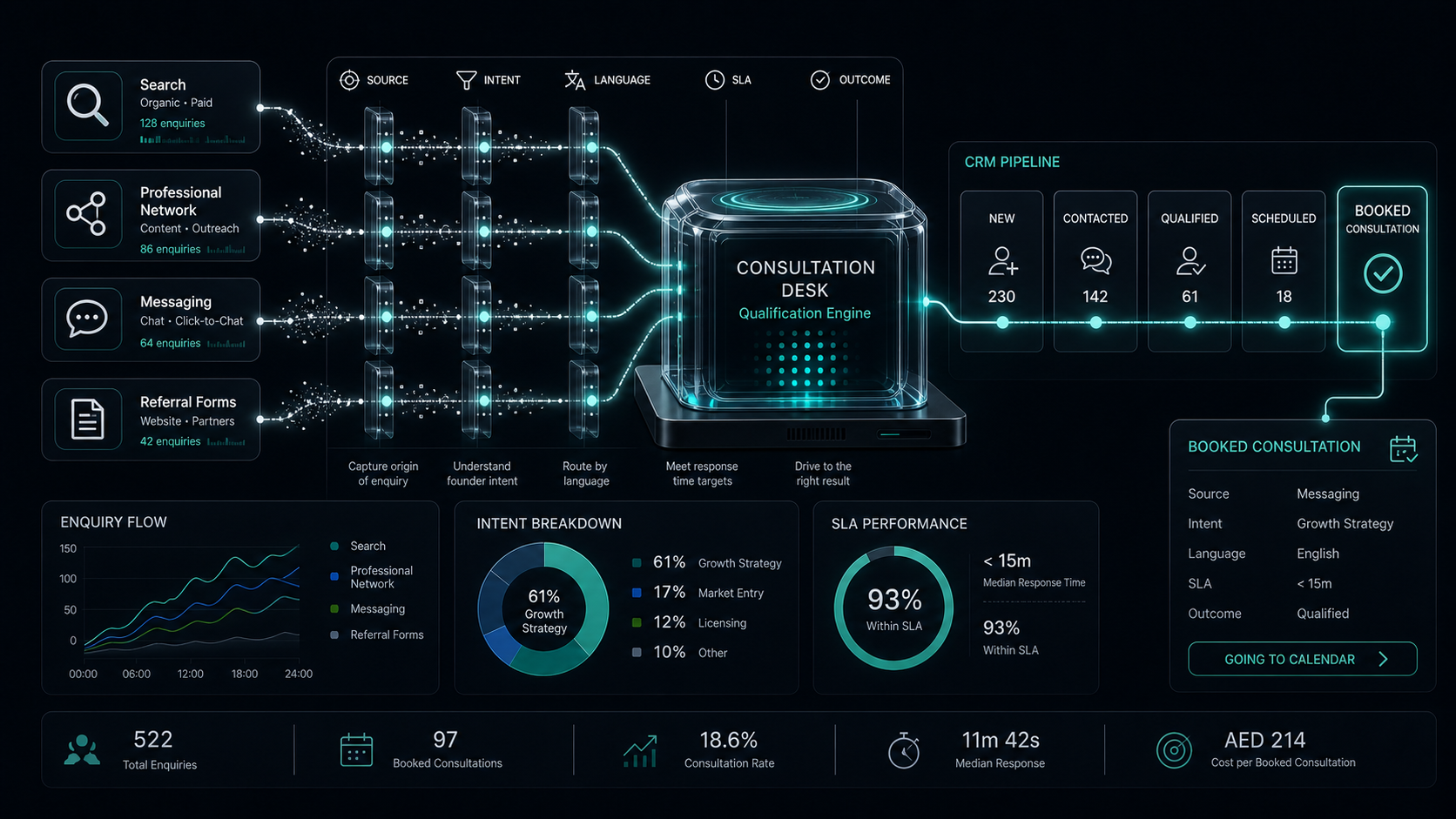
A practical first workflow for a UAE brokerage or service company is WhatsApp-to-CRM lead handling. This reference scenario is illustrative, not a client result: 50 WhatsApp property leads per day, a 15-minute first-response SLA during business hours, and manager approval before any price, availability, refund, discount, or financial commitment message is sent.
The first version should not try to close deals. It should make lead handling cleaner: no lost messages, fewer duplicate records, faster triage, better bilingual summaries, and visible accountability. Once this works, the next scope can add property matching, document collection, call summaries, broker handoff, and reporting.
The same pattern applies outside real estate. A clinic can use the structure for intake forms and scheduling. A logistics team can use it for delivery-status queries. A finance team can use it for invoice triage. The workflow changes, but the control pattern stays the same: classify, extract, route, approve, log, monitor.
What Breaks And How To Work Around It
AI automation usually fails in the handoffs, not in the model. The brittle parts are source data, permissions, exceptions, and ownership.
Arabic-English ambiguity needs a review lane. A customer might write Arabic, use English property names, and include transliterated neighbourhoods in the same message. The system should preserve the original message, produce a working summary, and route unclear intent to a human. Do not overwrite source language with a model's cleaned version.
WhatsApp integrations need official handling. If the provider cannot explain whether they are using an approved WhatsApp Business route, how templates are managed, and what happens when a number is rate-limited or blocked, do not put customer communication on that setup.
Finance and contractual terms need approval locks. A model can draft a reply that says "we will check availability" or "the finance team will review this invoice." It should not approve a discount, refund, supplier award, fund movement, or payment commitment. Those actions need named approvers and log evidence.
Summaries need source links. A CRM note that says "customer is ready to buy" is not enough. The note should link back to the source message, call transcript, document, or email so a person can verify the reasoning. If the source cannot be reviewed, the summary should not drive a decision.
Monitoring needs an owner. After launch, someone must review failed runs, low-confidence cases, override rates, response times, and customer complaints. Without monitoring, the workflow becomes another hidden system that only gets attention after a failure.
The Durable Takeaway
Buy AI automation services for one controlled workflow first. Make the provider prove the trigger, source data, approval point, audit log, exception path, processing location, and handover plan. Then expand.
The UAE advantage is not moving fastest with the loudest AI claim. It is building workflows that are useful enough for operators and controlled enough for a board, auditor, regulator, or enterprise buyer to trust.
What are AI automation services?
AI automation services connect AI models, workflow tools, business systems, and human approval steps so routine work can move faster. The useful version is not just a chatbot; it is a logged workflow with owners, exceptions, and measurable outcomes.
Should a small UAE business hire an AI automation agency or buy a platform?
Buy a platform when the workflow is simple, low-risk, and your team can own the rules. Hire a specialist when the workflow touches customer data, WhatsApp, CRM, finance, approvals, bilingual content, or regulated records.
What should be automated first?
Start with intake, routing, summarisation, data extraction, duplicate checks, and approval preparation. Do not start with final decisions, medical advice, price commitments, supplier awards, or fund movements.
What makes AI automation risky in the UAE?
The main risks are personal-data handling, unclear approval ownership, weak logs, bilingual misunderstandings, unsupported WhatsApp integrations, and vendors that cannot explain where data is processed or stored.
How do we know if an AI automation provider is serious?
Ask for a workflow map, data map, approval matrix, exception rules, audit event list, and handover plan. If the provider can only show a demo, keep the scope out of production.
Scope Your Workflow Automation
Map one UAE workflow with the controls, approvals, logs, and handoff needed before you buy tools or hire an automation provider.
Jun 3, 2026