AI Receptionist for Dubai Law Firms: Buy a Service or Build an Owned Agent?
Compare off-the-shelf and owned AI receptionists for Dubai law firms, with EN/AR, data, handoff, pricing, and human-control rules.


Do not choose a Dubai law firm's AI receptionist by voice quality or monthly price. RingCentral AIR is not listed for UAE availability and its published languages do not include Arabic; an owned agent can fit the firm's phone, CRM and EN/AR intake, but legal advice, conflict decisions and sensitive case facts must stay behind a human handoff.
The verdict: buy convenience only when the UAE gates pass
A Dubai law firm should keep its human front desk or build an owned intake agent; it should not buy a packaged receptionist until UAE availability, Arabic performance and data handling are confirmed in writing. That removes RingCentral AI Receptionist from today's shortlist for most Dubai firms, despite its attractive price and polished feature set.
RingCentral says AIR is available as a standalone or add-on licence in the US and Canada, and as an add-on in the UK, Australia and EU. The current product page does not include the UAE. It lists English, Spanish, French, Italian, German and Portuguese, with more languages coming soon, but not Arabic.
An owned agent is not automatically the answer. It becomes the better option when the firm's calls follow repeatable routes, its existing number can connect cleanly, its CRM has an accountable owner, and the partners will define what the agent must refuse. A small practice with low call volume and highly varied matters may get more value from a trained person using a disciplined intake form.
For a DIFC corporate firm, the practical split is simple: let the agent identify the caller, language, broad matter category and requested next step. Let an authorised person decide whether the firm can act, what facts to collect and what advice to give.
Human desk, packaged AIR, or owned agent
The operating model matters more than the voice. A managing partner is choosing who controls the number, intake policy, data, integrations and failure path, not merely who answers after hours.
At RingCentral's included 100-minute marker, Retell's published platform range calculates to $7-$31. That is not an owned receptionist price. It excludes the work that makes the agent usable: UAE telephony, conversation design, CRM and calendar integration, permissions, evaluation, monitoring and incident handling. RingCentral's $49 standalone price buys a packaged product, while an owned build buys a controlled operating system.

The product page is where the first shortlist check happens: availability and languages come before the demo or subscription price.

RingCentral AI Receptionist can answer inbound calls, capture leads with custom intake questions, route calls, schedule appointments, update Salesforce, HubSpot or Zoho, send confirmation texts, and hand off complex calls with a summary. Those are useful functions. They do not overcome a missing UAE availability listing or the absence of Arabic in the published language set.
Retell is a platform layer, not a finished law-firm receptionist. It lists pay-as-you-go AI Voice Agent pricing at $0.07-$0.31 per minute, with 20 free concurrent calls, call analytics and transcripts, simulation testing, webhooks and API access. The platform gives a build team more control, while the firm remains responsible for the intake policy and the production outcome.

The platform's usage price is visible, while the firm's real cost still depends on the production layer around it.

The operating-model comparison below keeps the subscription, platform and owned-build routes distinct.

The decision flips toward an owned agent when missed calls are measurable, the same intake questions recur, and a booked consultation or routed callback can be written into the CRM as an attributed outcome. It flips back toward people when every caller needs substantive legal judgement before a safe route can be chosen.
Automate the route, not the legal judgement
The agent should organise access to the firm, never decide the matter. That means it can collect the minimum routing facts and complete administrative actions, while an authorised person owns conflicts, scope, urgency and advice.
For an illustrative DIFC corporate-firm flow, the agent may handle:
- the caller's name and preferred contact method;
- Arabic or English preference;
- a broad category such as company formation, employment, commercial dispute or existing-client call;
- the requested next step, such as a callback or consultation slot;
- routing to the approved person or calendar; and
- a CRM outcome such as
consultation_requested,existing_client_transferorhuman_review.
It should not ask the caller to narrate the evidence, upload documents or identify all counterparties before the firm has applied its own conflict and confidentiality procedure. It should not interpret law, estimate prospects, quote an unapproved fee, promise a deadline or decide that a matter is not urgent.
Open with identity and scope
State that the caller is speaking with the firm's AI receptionist, offer Arabic or English, and explain that the agent can route the enquiry or arrange a consultation but cannot give legal advice.
Collect only routing data
Ask for the caller's name, contact channel, broad matter category and preferred next step. If the caller begins sharing sensitive case facts, stop that path and offer a human callback.
Apply the human gate
Send existing clients, complaints, urgent-risk language, unclear matters, legal questions and conflict-sensitive calls to an approved person. The agent should refuse to improvise when the route is uncertain.
Write an attributable outcome
Create or update the CRM record with source, language, route, owner and next action. A transcript is not an outcome; a named owner and scheduled next step are.
This boundary protects the brand as well as the caller. A fluent answer that is outside the agent's authority is a worse result than a quick, respectful transfer.
EN/AR is an acceptance test, not a feature badge
Arabic support is only useful when the agent understands the firm's callers, names, legal terms and language switching on real phone audio. Retell says an ASR upgrade added more than 22 languages including Arabic and brought its total language count to more than 50. Its own guidance tells builders to translate every conversation node and test the conversation after choosing the language.
That is a credible foundation, not proof that a Dubai legal intake flow is ready. The firm still needs test calls covering:
- English, Arabic and mixed-language openings;
- Emirati, Gulf and expatriate names spoken over normal mobile audio;
- company names, email addresses, dates and callback numbers;
- callers who interrupt, change language or speak from a noisy location;
- legal vocabulary used by the firm's actual practice groups; and
- the exact phrases that must trigger a person.
The pass condition is not "the transcript looked mostly right." The route, captured fields and next action must be right, and the agent must fail safely when confidence drops. Each wrong transfer becomes a test case before the next release.
RingCentral's language limitation is clearer. Its product page lists several supported languages but not Arabic. A Dubai firm should not infer Arabic from a general claim of multilingual support, and it should not treat a future-language statement as a live capability.
Make the phone and human handoff work before adding AI
The existing number and the human transfer are the production spine. If either fails, the agent becomes a new place for enquiries to die.
Retell documents two ways to use a firm's existing number with a custom telephony provider: elastic SIP trunking, which it recommends, or dialling a Retell SIP URI. SIP is the standard connection that lets a phone system route calls over internet telephony. The documentation also makes the limitation plain: the setup cannot be proven until a call is made.
Retell's transfer tool works on phone calls for Retell and imported numbers and can transfer a call to a human agent. A cold transfer sends the call directly to the destination and drops the AI agent; a warm transfer keeps the agent on the line so it can verify an answer, play a private message or introduce the caller before connecting.
For a law firm, warm transfer is the safer default for sensitive or urgent routes. The receptionist can tell the staff member who is calling, the language, the broad category and why the transfer fired without repeating substantive case facts in an open office.
Use a routing matrix before configuration:
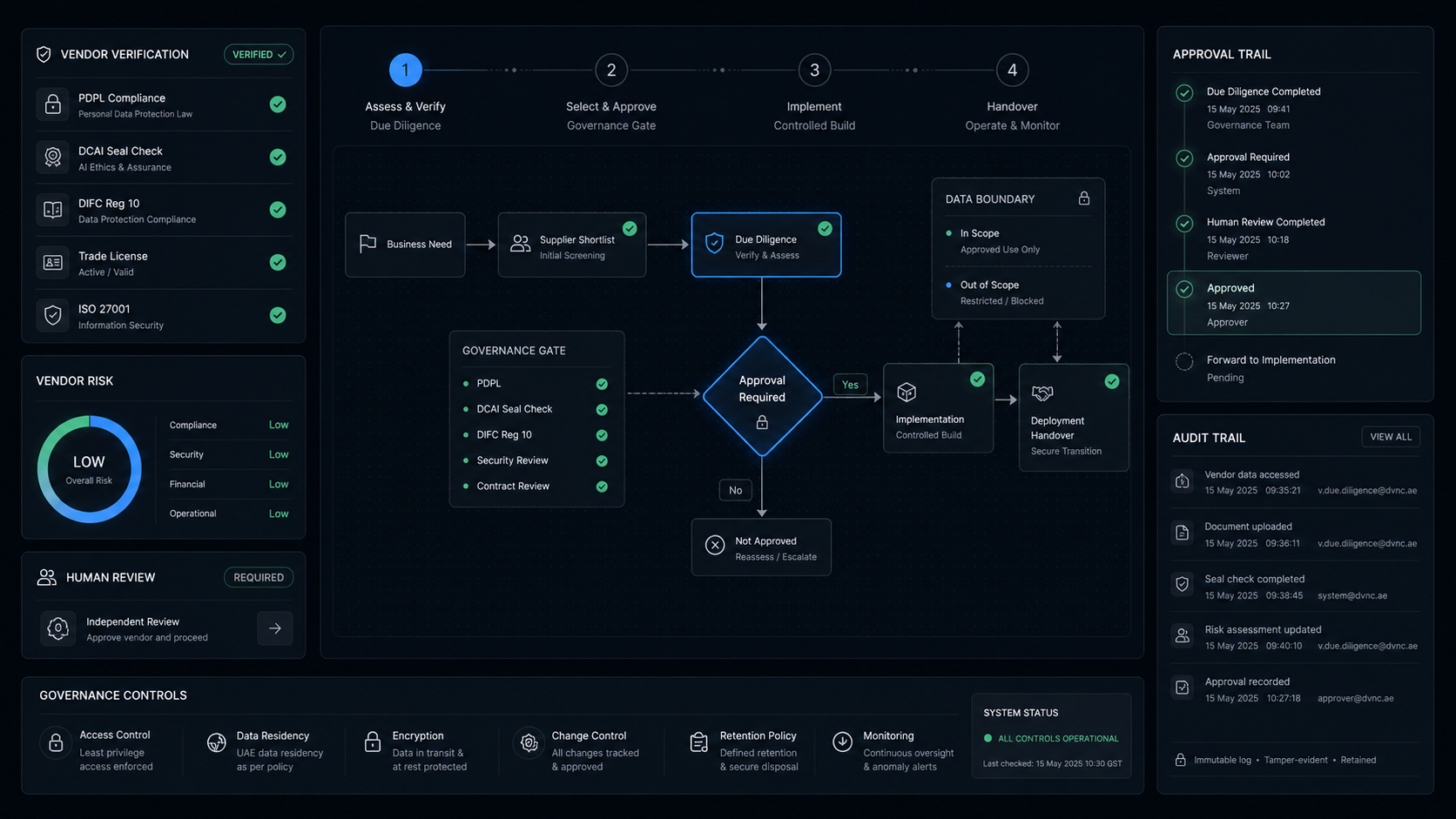
The CRM needs one accountable owner for each outcome. Do not send every unresolved call into a shared WhatsApp inbox with no service clock. If the firm is still choosing its implementation partner, use a governed AI provider-selection checklist before discussing voices and demos.
Collect less data on the first call
A first-call agent should minimise data by design because legal enquiries can become sensitive before the firm has accepted the matter. The safest default is to collect enough to route and schedule, then move substantive intake behind an authorised human step.
Federal Decree Law No. 45 of 2021 Regarding the Protection of Personal Data is the UAE's Personal Data Protection Law, and it came into force on 2 January 2022. The federal Personal Data Protection Law applies to personal-data processing in full or in part through electronic systems, inside or outside the UAE.
The federal Personal Data Protection Law sets controls for processing, requires companies holding personal data to secure it and maintain its confidentiality and privacy, and prohibits processing without the owner's consent except in specified cases. It gives a data owner rights to request correction of inaccurate data and to restrict or stop processing, and it sets requirements for cross-border transfer and sharing. These points come from the UAE Government's official data-protection summary.
A DIFC firm has an additional, specific regime. The DIFC Commissioner of Data Protection supervises and enforces DIFC Law No. 5 of 2020, which sets rules and obligations for collecting, handling and using personal data.
Article 9 of DIFC Law No. 5 of 2020 requires personal data to be processed for specified, explicit and legitimate purposes; limited to what is necessary; kept no longer than necessary; and secured against unauthorised or unlawful processing, accidental loss, destruction or damage. Under Article 9, the controller or processor is responsible for and must be able to demonstrate compliance with those principles. Article 10 lists lawful bases that include specific consent, steps requested before a contract, and compliance with applicable law.

Turn those principles into configuration:
- publish the purpose of the receptionist and the fields it collects;
- choose and document the applicable lawful basis with the firm's counsel or data-protection lead;
- keep substantive facts and documents out of the first-call flow;
- define whether recordings and transcripts are created, who can access them and when they are deleted;
- map every processor and cross-border data route before launch;
- give staff a correction and deletion workflow; and
- log access, transfers, CRM writes and failures.
The federal PDPL and DIFC law are not interchangeable. A mainland firm and a DIFC firm should validate their own applicable obligations. The implementation rule remains sound in either case: collect less, state the purpose, control access and preserve a human route.
Launch only when failure is contained
A natural demo is not a production acceptance test. Launch when the firm can show what happens on a clear call, an ambiguous call and a failed call, and when each outcome has an owner.
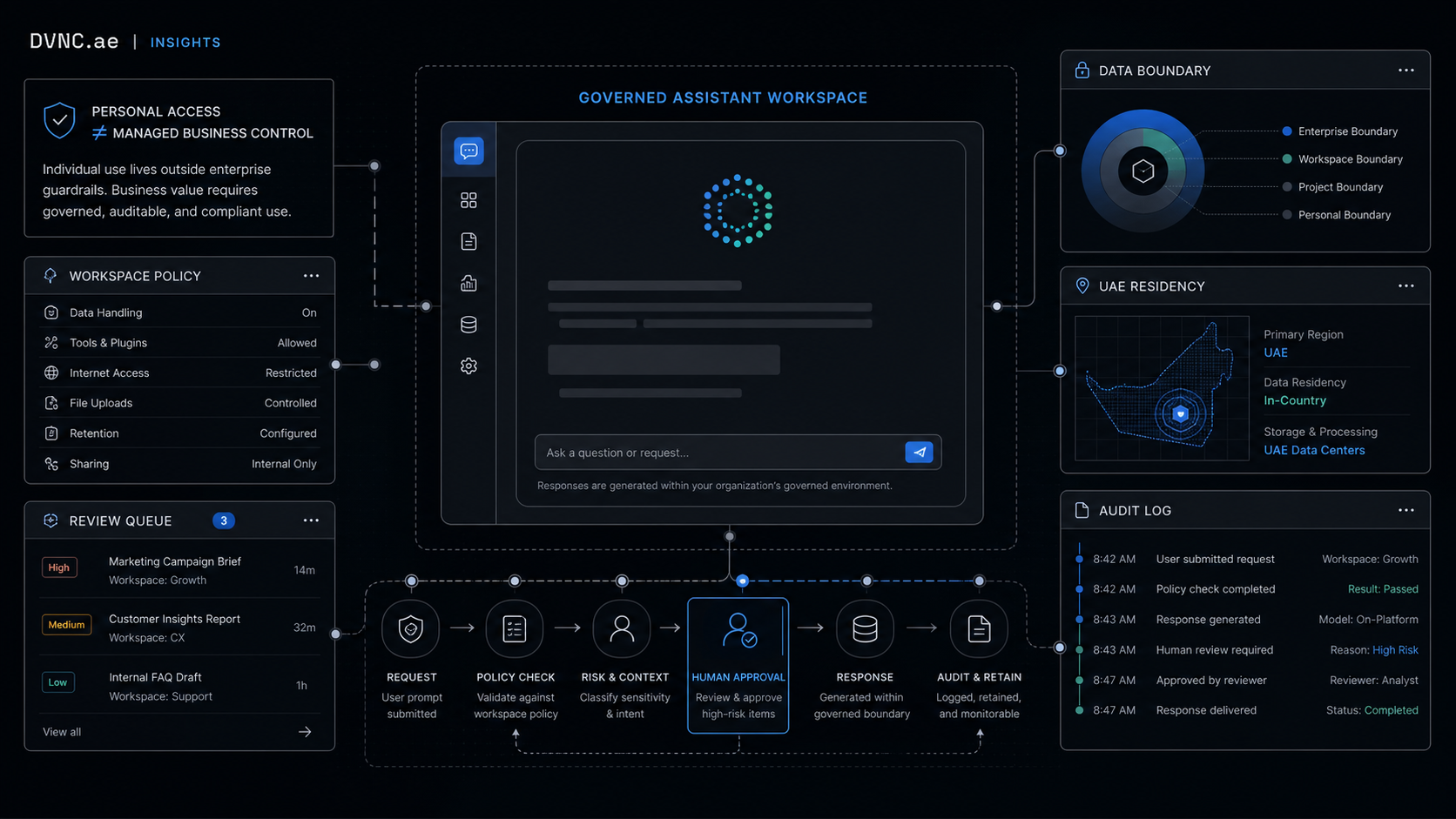
Run acceptance calls for every branch in the routing matrix. Include bilingual switching, noisy audio, repeated questions, silence, interruptions, an existing client, an advice request, an urgent-sounding caller, a failed calendar write, a failed CRM write and an unavailable human destination. Review the recording or approved call evidence, transcript, structured fields, route, human handoff and final CRM status together.
The readiness questions are operational:
- Does the firm control the phone number and carrier relationship?
- Can staff edit the knowledge and routing rules without opening a developer ticket?
- Does every sensitive route reach a named person or safe callback queue?
- Can the system refuse legal advice consistently in Arabic and English?
- Can the firm trace each enquiry from call source to consultation outcome?
- Are data access, retention, deletion and cross-border routes documented?
- Is there a rollback path when the agent, carrier, CRM or calendar fails?
If those answers are unclear, an AI readiness assessment is the next step, not a larger call bundle. The agent should enter production only after the failure paths are as deliberate as the happy path.
Frequently asked questions
What is the best AI receptionist for a law firm?
The best option is the one that passes local-number, Arabic and English, data, integration and human-handoff tests. For a Dubai firm today, a packaged product that is not officially listed for UAE availability is not a shortlist item, however polished its demo sounds.
What should AI intake for law firms collect?
Collect the minimum needed to identify the caller, select a language, route the broad matter category and arrange the next step. Move conflict decisions, detailed case facts, documents and legal questions to an authorised person.
How much does an AI receptionist cost?
RingCentral says standalone AIR starts at $49 per month and its RingEX add-on starts at $39 per month, both with 100 minutes, but its published availability does not include the UAE. Retell lists a $0.07-$0.31 per-minute platform range. An owned production agent also needs telephony, integration, testing, data controls and operations; DVNC.ae's AI Agent Build starts at AED 90,000.
Apply for a Build
Scope an owned EN/AR receptionist around your UAE number, intake policy, CRM, data controls and human handoff.
Jul 17, 2026